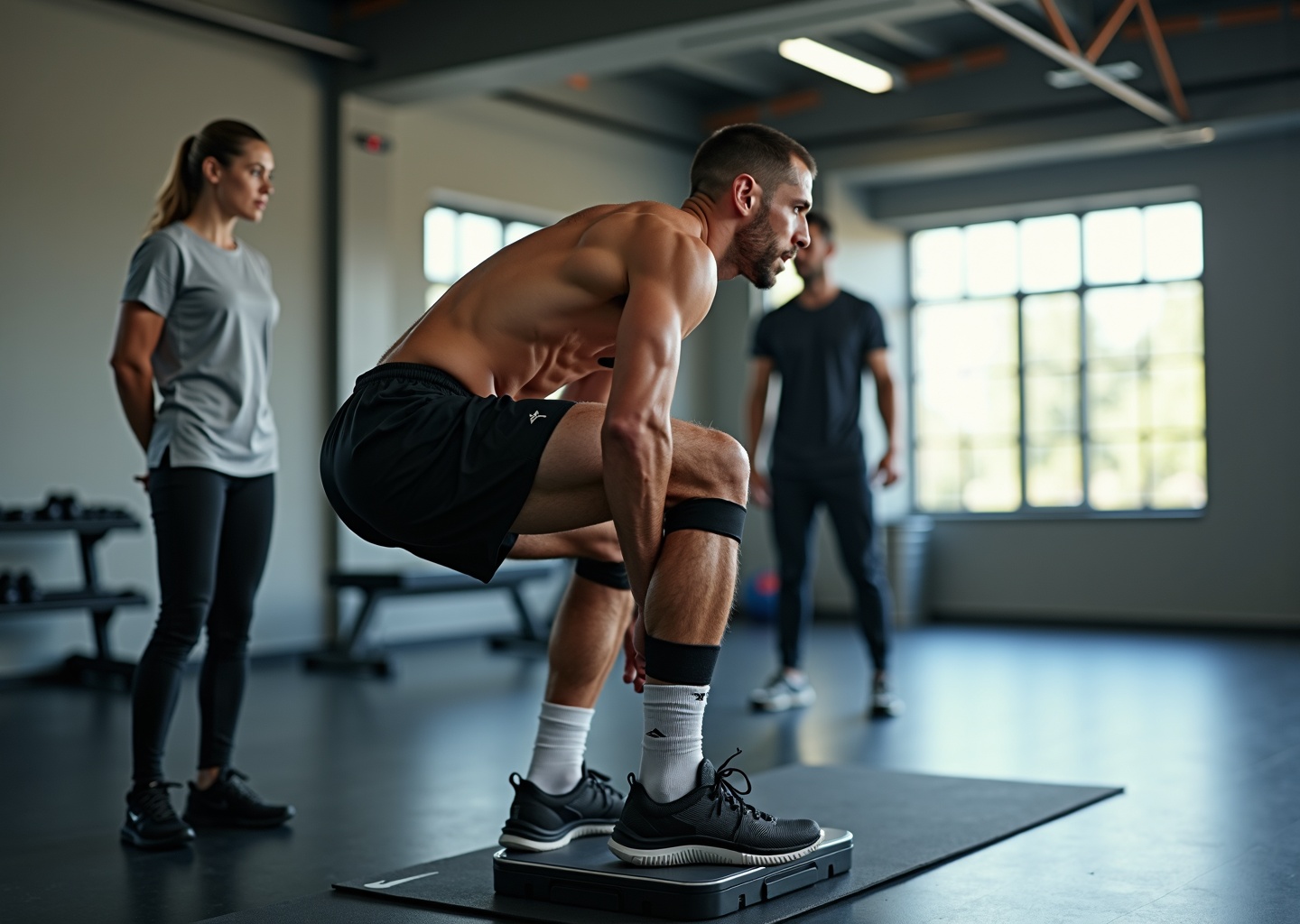
Patellar tendonitis, commonly called jumper’s knee, is a load-related tendon disorder that limits athletes’ performance and daily movement. This article explains diagnosis, contributing factors, and a progressive, evidence-informed exercise plan focusing on isometrics, eccentric and heavy slow resistance training, mobility and return-to-sport criteria for runners, jumpers, and everyday athletes.
Understanding Patellar Tendonitis and How It Differs from Other Knee Pain
Patellar tendonitis, more accurately termed patellar tendinopathy, is a common source of knee pain, especially for athletes in jumping sports. It’s often called “jumper’s knee” for a reason. This condition isn’t about simple inflammation, which is what the “-itis” suffix implies. Instead, it’s a problem of load versus capacity. Your patellar tendon, the thick band connecting your kneecap (patella) to your shinbone (tibia), is subjected to more stress than it can tolerate, leading to structural changes and pain. The core of the issue is a breakdown in the tendon’s collagen fibers. In a healthy tendon, collagen is neatly aligned, strong, and resilient. In tendinopathy, these fibers become disorganized, degenerative, and less capable of handling force. This process is often accompanied by neovascularization, where new, fragile blood vessels and nerve endings grow into the tendon. These new nerves are a key reason for the pain you feel.
The symptoms of patellar tendinopathy are usually very specific. The pain is almost always localized to a precise spot at the bottom of the kneecap, right where the tendon begins. It’s a load-dependent pain, meaning it hurts when you use the tendon. Activities like jumping, landing, deep squatting, or even going down stairs can trigger a sharp, aching sensation. Often, the tendon feels stiff in the morning or after periods of inactivity, but it might “warm up” and feel better during activity, only to hurt more afterward or the next day.
It’s important to distinguish jumper’s knee from other common types of anterior knee pain.
- Patellofemoral Pain Syndrome (PFPS)
This is often described as pain behind or around the kneecap. It feels more diffuse and is related to how the patella tracks in its groove on the femur. Patellar tendinopathy pain is highly localized on the tendon itself, below the kneecap. - Quadriceps Tendinopathy
This condition is very similar to patellar tendinopathy in its mechanism but occurs in a different location. The pain is at the top of the kneecap, where the large quadriceps tendon attaches. The location of the tenderness is the key differentiator.
A diagnosis of patellar tendinopathy is primarily clinical, meaning a skilled practitioner can usually identify it through a thorough history and physical exam. They will want to know about your sport, training volume, and any recent changes or spikes in your activity. The physical exam focuses on pinpointing the pain. A key test is direct palpation of the inferior pole of the patella; tenderness here is a classic sign. Another common provocative test is the single-leg decline squat. Performing a squat on a slanted board increases the load on the patellar tendon, and if it reproduces your specific pain, it strongly suggests tendinopathy.
Imaging like ultrasound or MRI can be used, but their role is often secondary. An ultrasound might show tendon thickening, disorganized fibers (hypoechoic areas), and signs of neovascularization. An MRI can also show increased signal within the tendon, indicating structural change. The major limitation of imaging is that these same changes are often found in athletes who have no pain at all. A scan can confirm the clinical suspicion or rule out other problems like a tear, but treatment should be guided by your symptoms and functional limitations, not just the image. The foundation of recovery is understanding that this is a load management issue.
This condition is incredibly common in sports that involve a high volume of jumping and landing. The prevalence in elite basketball players can be over 30%, and in elite volleyball players, it can reach as high as 45%. Runners can also develop it, particularly with sudden increases in mileage or hill training. The risk is often magnified by abrupt spikes in workload, like during a preseason training camp, or by consistently training on hard, unforgiving surfaces that increase the impact forces transmitted through the tendon.
Risk Factors Biomechanics and Assessment for Targeted Rehab
Effective treatment for patellar tendinopathy starts with understanding its cause: a combination of factors that overload the tendon beyond its capacity. While some risk factors are non-modifiable, identifying and addressing the modifiable ones is the key to building a successful rehab plan.
Let’s start with the non-modifiable risk factors, the things you can’t change but should be aware of.
-
Age and Sex
Patellar tendinopathy is most common in athletes from adolescence through their early 30s. Studies also show it affects male athletes more frequently than female athletes. For example, some research indicates that jumper’s knee is almost twice as common in male nonelite athletes compared to their female counterparts. -
Body Composition
Having a higher body weight or being taller can increase the absolute load on the patellar tendon during activities like jumping and landing, which can contribute to the risk.
Now for the good news. The modifiable risk factors are where we can make a real difference. These are the areas your rehab will target.
-
Training Errors and Load Spikes
This is the most common culprit. A sudden increase in training volume, intensity, or frequency without allowing the tendon time to adapt is a classic trigger. Think about starting a new plyometric program, a sudden jump in weekly mileage, or going from one to three basketball games a week during preseason. -
Poor Landing Mechanics
How you land from a jump matters. Landing with stiff knees, limited hip flexion, or allowing your knees to collapse inward (valgus) places excessive strain directly on the patellar tendon instead of distributing the force through the larger muscles of your hips and legs. -
Weak Hip Muscles
Your glutes (hip extensors) and outer hip muscles (abductors) are your powerhouse for controlling movement. When they are weak, the quadriceps have to overwork to compensate, which in turn overloads the patellar tendon. Research has specifically linked weaker hip muscles with a higher likelihood of developing patellar tendinopathy. -
Reduced Ankle Dorsiflexion
Dorsiflexion is the ability to pull your toes up toward your shin. Limited motion here forces your body to find movement elsewhere during squats and landings, often leading to increased forward knee movement and greater stress on the patellar tendon. -
Muscle and Tissue Stiffness
Tightness in the quadriceps, hamstrings, or calves can alter the mechanics of your entire leg. Stiff quads can pull on the patella, increasing tension on the tendon, while tight calves can limit ankle motion, leading to the same compensations mentioned above.
A targeted rehab plan starts with a thorough assessment to pinpoint which of these factors apply to you. A clinician can guide you, but an informed athlete can perform many of these checks as well.
Here is a simple assessment checklist.
-
Pain History and Load Mapping
Start by becoming a detective. When does it hurt? What specific activities trigger the pain? How much of that activity does it take? Keep a log of your training and symptoms to identify the exact loads your tendon can and cannot tolerate. This is your baseline. -
Functional Tests
These tests are designed to reproduce your symptoms in a controlled way. Can you perform a single-leg squat or a step-down from a small box without pain? How many single-leg hops can you do before the pain starts? The goal is to find the threshold where symptoms appear. -
Strength Tests
Check for imbalances. An isometric knee extension hold (pushing against an immovable object) can reveal weakness and may also provide temporary pain relief. A single-leg decline squat, performed on a small slant board, specifically loads the patellar tendon and is a great test of its strength capacity. -
Mobility and Flexibility Measures
Assess your ankle dorsiflexion with the knee-to-wall test. Measure the flexibility of your quadriceps, hamstrings, and calves. Are there significant differences between your left and right sides? -
Movement Analysis
Record yourself doing a few double-leg and single-leg landings from a small box. Watch for key cues. Do your knees cave inward? Do you land with stiff legs and an upright chest, or do you absorb the force by sinking into your hips?
Finally, to ensure your rehab is working, you need objective ways to track progress. Two simple tools are incredibly useful. The first is the VISA-P score, a questionnaire that quantifies your pain and function, giving you a score out of 100. Tracking this score weekly can show you if you’re on the right path. The second is the Limb Symmetry Index (LSI), which compares the performance of your injured leg to your uninjured leg on strength or hop tests. An LSI of 90% or greater is often a key milestone before returning to sport. This assessment provides the data needed to build the individualized loading program we will discuss next.
Rehab Principles and Immediate Pain Management Strategies
With contributing factors identified, recovery hinges on a consistent framework, not a single magic exercise. The goal is to calm the irritated tendon and then systematically rebuild its capacity through smart load management, guided by a clear pain monitoring strategy. This process is unique to each individual.
The cornerstone of any successful tendon rehab program is load management. This does not mean complete rest. In fact, prolonged inactivity can be counterproductive, weakening the tendon and surrounding muscles. Instead, we practice relative rest. Think of it as turning down the volume on activities that provoke your pain, not turning them off completely. This involves modifying your training to stay below the threshold that causes significant irritation. If jumping is the problem, you might temporarily replace plyometrics with lower-impact cross-training like swimming or cycling to maintain your fitness without stressing the tendon. The key is to find a level of activity that doesn’t worsen your symptoms.
Your recovery will follow a path of graded loading progression. The tendon needs stress to adapt and get stronger, but it must be the right kind of stress at the right time. We start with exercises that reduce pain and activate the muscles, then gradually introduce heavier, slower loads to build strength, and finally re-introduce faster, sport-specific movements. This structured approach ensures the tendon’s capacity increases step-by-step, preparing it for a safe return to play. Progress is dictated by your symptoms, not by a rigid calendar.
To guide this progression, we use a pain monitoring model. A helpful rule of thumb is the “safe pain window.” It’s generally considered acceptable to experience mild pain, perhaps up to a 3 out of 10, during your rehab exercises. However, this pain should not increase during the session, and it must return to your baseline level within 24 hours. If your pain is sharper, exceeds a 4/10, or is worse the next morning, you’ve likely done too much. This feedback loop is your most important guide. It tells you when it’s safe to increase the load and when you need to pull back. Every person’s tolerance is different, so this individualized approach is critical for steady, long-term progress.
For immediate pain relief, one of the most effective tools is the isometric knee extension hold. These static contractions can have a significant analgesic, or pain-reducing, effect.
- Find a knee extension machine or create a setup where you can push your shin against an immovable object.
- Position your knee at an angle between 30 and 60 degrees of flexion.
- Push into the object with a strong, sustained effort for 30 to 60 seconds.
- Rest for a minute or two, and repeat for 4 to 6 sets.
Performing these daily can help calm down an irritable tendon, making it easier to tolerate your other rehab exercises. Alongside isometrics, some athletes find short-term relief using a patellar tendon strap worn just below the kneecap. This may help by changing how forces are distributed through the tendon during activity. Additionally, soft tissue work or foam rolling for the quadriceps, hamstrings, and calves can help reduce muscle stiffness that may be contributing to poor mechanics. While over-the-counter anti-inflammatories might offer temporary relief in a highly irritable phase, they don’t address the underlying issue of tendon capacity. If pain is severe or doesn’t respond to these initial strategies, it’s important to consult a clinician.
You may hear about other treatments, but it’s wise to approach them with caution. Corticosteroid injections, for example, are generally not recommended for patellar tendinopathy. While they can provide powerful short-term pain relief, evidence suggests they may impair long-term tendon health and potentially increase the risk of rupture. Other modalities like shockwave therapy and platelet-rich plasma (PRP) injections have shown mixed results in research. Some studies suggest they may be beneficial for a subset of individuals who haven’t responded to exercise, but the evidence is not consistently strong. These should be considered secondary options and discussed thoroughly with a knowledgeable healthcare provider after a dedicated course of progressive loading has been completed.
Progressive Exercise Program with Specific Exercises Sets Reps and Progressions
This progressive program is designed to rebuild your tendon’s capacity for load, moving from simple, pain-relieving exercises to sport-specific movements. Remember to use the pain monitoring principles we discussed earlier; a little discomfort during an exercise is often acceptable, but sharp, worsening pain is a signal to stop. Progress is not always linear, so listen to your body and adjust as needed.
Phase 1. Early Stage (Approximately Weeks 0–4). Calm the Tendon and Re-establish Activation
The primary goal here is to reduce pain and start waking up your quadriceps muscles without further irritating the patellar tendon. We want to build a foundation for more intense work later on. This phase is all about gentle loading and control.
-
Knee Extension Isometrics.
This is your go-to for pain relief and early strength. Sit on a chair or the edge of a bench with your knee bent to a comfortable angle, typically between 30 and 60 degrees. Place your other foot or a fixed object in front of the foot of your affected leg. Gently push your shin forward into the object, creating a quadriceps contraction without any movement at the knee joint.
Parameters. Hold the contraction for 30–60 seconds. Rest for a minute, and repeat 4–6 times. You can do this daily, even multiple times a day, to help manage pain. -
Closed-Chain Quad Activation.
These exercises re-establish the brain-muscle connection in a low-load environment.
Mini-Squats. Stand with your feet shoulder-width apart. Slowly bend your knees to about 30–40 degrees, ensuring there is no sharp pain in the tendon. Focus on keeping your weight evenly distributed and your knees aligned over your feet. Perform 3 sets of 15–20 repetitions.
Straight-Leg Raises. Lie on your back with your unaffected leg bent and foot flat on the floor. Keep your affected leg straight and slowly lift it about a foot off the ground, hold for a second, and lower it with control. Perform 3 sets of 15–20 repetitions.
Progression Rule. In this phase, you progress by increasing hold times for isometrics or performing your reps with better control, not by adding weight. The goal is to complete the exercises with minimal to no pain.
Phase 2. Mid Stage (Approximately Weeks 4–12). Build Tendon Strength and Capacity
Once your pain is well-controlled with daily activities, it’s time to start building real strength in the tendon and surrounding muscles. The objective is to increase the tendon’s ability to handle load through controlled, heavy exercises.
-
Eccentric Decline Single-Leg Squats.
This exercise specifically targets the patellar tendon. Stand on a decline board or a ramp angled at about 15 degrees. Balancing on your affected leg, slowly lower yourself into a single-leg squat over 3–4 seconds. Go as deep as you can without significant pain. Use your unaffected leg to push yourself back up to the starting position; the focus is entirely on the slow lowering (eccentric) phase.
Parameters. Aim for 3 sets of 15 repetitions, once a day. If this is too provocative, start with fewer reps or a smaller range of motion. -
Heavy Slow Resistance (HSR).
HSR is a highly effective alternative or complement to eccentrics. Use a leg press machine or perform squats (goblet or barbell). The key is the tempo. Take 3–4 seconds for the lowering phase and 3–4 seconds for the lifting phase. The movement should be slow and deliberate.
Parameters. Perform 3 sets of 6–8 repetitions. The weight should be challenging enough that the last couple of reps are difficult but you can maintain perfect form. Do this 2–3 times per week on non-consecutive days. -
Hip and Calf Strengthening.
A strong kinetic chain is crucial. Add exercises like single-leg Romanian deadlifts, hip thrusts, and calf raises to your routine to improve stability and reduce stress on the knee. Perform these 2–3 times per week.
Progression Rule. If your pain remains within the acceptable range (e.g., below a 3/10 and settles within 24 hours), you can increase the load by 5–10% each week.
Phase 3. Late Stage (Approximately Weeks 8–16+). Develop Sport-Specific Power
This phase bridges the gap between gym strength and the demands of your sport. The goal is to re-train the tendon to store and release energy efficiently and safely during explosive movements.
-
Plyometric Integration.
Do not rush into this phase. You should have a solid strength base and minimal pain with the HSR exercises.
Step 1. Low-Intensity Hops. Start with two-footed hopping in place, like pogo jumps. Focus on short ground contact time and good form.
Step 2. Directional and Single-Leg Hops. Progress to hopping forward, backward, and side-to-side. Once comfortable, move to single-leg hops.
Step 3. Drop Landings. Start by stepping off a low box (6 inches) and landing softly on both feet, absorbing the impact by bending at the hips and knees. Progress to higher boxes and eventually to single-leg landings.
Progression Rule. Start with low volume (e.g., 3 sets of 10 hops) and gradually increase the number of jumps or the intensity (e.g., hop height) each week, provided your tendon responds well.
Sample Mid-Phase Weekly Schedule
- Monday. HSR (Leg Press/Squats), Hip Thrusts, Calf Raises
- Tuesday. Active Recovery (Cycling or Swimming), Mobility Work
- Wednesday. Eccentric Decline Squats, Single-Leg RDLs, Core Work
- Thursday. Active Recovery or Rest
- Friday. HSR (Leg Press/Squats), Hip Thrusts, Calf Raises
- Saturday. Light Activity (e.g., walking) and Mobility
- Sunday. Rest
Safety Red Flags. When to Pause
You must monitor your symptoms closely. Pause your progression and consider consulting a clinician if you experience any of the following.
Sharp or significantly worsening pain during or after an exercise.
Noticeable swelling around the knee.
A sudden loss of function or inability to bear weight.
If symptoms flare up, it’s best to regress to the previous pain-free set of exercises for a few days before attempting to progress again.
Frequently Asked Questions
Navigating the day-to-day realities of jumper’s knee can bring up a lot of questions. After laying out the exercise progressions, it’s helpful to tackle some of the practical concerns that pop up along the way. Here are clear, evidence-informed answers to the questions athletes ask most often.
What causes jumper’s knee and how long does recovery take?
Jumper’s knee is an overuse injury caused by training loads exceeding the patellar tendon’s capacity to adapt, often triggered by a sudden spike in volume or intensity. Recovery is highly individual. A mild, early-stage case might resolve in 6 to 8 weeks with diligent rehab. However, more persistent and severe cases often require 3 to 6 months of consistent work. For some, a full return to high-level sport can take closer to a year. Patience is non-negotiable. When to seek professional care: If your pain is sharp, doesn’t improve after 2-3 weeks of modifying your activities, or if you have significant swelling, it’s time to see a physical therapist or sports physician.
Which exercises should I avoid early on?
In the initial phase, your main goal is to calm the irritated tendon. That means avoiding anything that causes sharp or significant pain. Steer clear of explosive movements like jumping, plyometrics, and sprinting. Deep, heavily loaded squats and lunges are also off the table. Any activity that makes the pain worse during the exercise or in the 24 hours that follow is too much for the tendon at its current capacity. The focus should be on the pain-relieving isometrics and low-load strength work detailed in the previous section. When to seek professional care: If even very gentle exercises like isometric holds or bodyweight mini-squats cause a notable increase in pain, you should get a professional assessment to ensure your program is properly calibrated.
Are eccentric exercises the best approach?
Eccentric exercises, like the single-leg decline squat, have long been a cornerstone of patellar tendon rehab and are very effective. However, they aren’t the only effective approach. More recent evidence shows that Heavy Slow Resistance (HSR) training, using exercises like leg presses or squats performed with a slow, controlled tempo, can be just as good, and sometimes better tolerated by athletes. The “best” approach is the one you can perform consistently with good technique and manageable pain. Many modern rehab plans blend isometrics for pain control with a progression into either eccentrics or HSR, depending on the individual’s response and equipment access. When to seek professional care: A physical therapist can help you determine which loading strategy is most appropriate for you and ensure your form is perfect to maximize benefits and minimize risk.
Can I keep running and how to modify training?
You might be able to, but not without significant changes. The key is to find your tendon’s current tolerance level. A good starting point is to cut your running volume and intensity by at least 50% and eliminate hills and speed work. If that’s still provocative, you may need to temporarily switch to non-impact cross-training like swimming or cycling to maintain your cardiovascular fitness. When you reintroduce running, do it gradually, increasing your volume by no more than 10% per week, and closely monitor your symptoms. When to seek professional care: If you can’t find a level of running that is mostly pain-free, a professional can help you develop a structured return-to-run plan that works.
Do braces or straps help?
A patellar tendon strap (sometimes called a Cho-Pat strap) can be a useful tool for short-term pain relief during activity. It applies pressure to the tendon, which is thought to alter the painful load and provide symptomatic relief. It can make performing your rehab exercises or modified training more comfortable. However, it’s a temporary aid, not a cure. The strap doesn’t heal the tendon; the progressive loading from your exercise program does that. Use it as a tool to enable your rehab, not as a long-term solution. When to seek professional care: If you find yourself needing the strap just to get through daily, non-athletic activities, it’s a sign that your tendon is highly irritable and you need to scale back and seek guidance.
What is the role of injections or surgery and when are they indicated?
These interventions are reserved for cases that don’t respond to a well-structured, consistent rehab program. Corticosteroid injections are generally avoided for patellar tendinopathy, as they may provide short-term pain relief at the cost of long-term tendon health. Other injectables like Platelet-Rich Plasma (PRP) have shown mixed results in research and are not a first-line treatment. Surgery is a last resort, typically only considered after 6 to 12 months of dedicated conservative management has failed to produce meaningful improvement. When to seek professional care: Discussions about injections or surgery should be with a sports medicine physician who can review your case after you’ve exhausted comprehensive, exercise-based rehabilitation.
How do I know I’m ready to return to sport?
Being pain-free is only part of the equation. A safe return to sport requires that you’ve rebuilt the tendon’s capacity to handle the high-speed, high-impact demands of your activity. You should be able to complete a full practice or training session with minimal to no pain (less than a 3/10) during or after. Objectively, your strength and functional performance on the injured leg should be at least 90% of your uninjured side. This is often measured with hop tests and strength testing. Finally, you must have completed a gradual, progressive return to sport-specific movements, like jumping and cutting, without any flare-ups. When to seek professional care: This is a critical phase where professional guidance is key. A physical therapist can perform the objective tests needed to clear you for return and help you design the final stage of your transition back to full competition safely.
Conclusions and Practical Next Steps
You’ve made it through the details of patellar tendonitis, from understanding the causes to learning specific exercises. Now, let’s bring it all together. The path to recovery isn’t about finding a single magic exercise but about embracing a systematic approach. The core principle is progressive loading. Your tendon needs to be challenged just enough to stimulate healing and build strength, but not so much that it becomes more irritated. This process is highly individual; what works for one person might be too much or too little for another. It’s a conversation between you and your body.
The journey begins with managing pain. Isometrics are your first and best tool for this. Holding a static contraction, like a wall sit or a seated knee extension, can provide significant pain relief and allow you to start loading the tendon without aggravating it. Once your pain is under control, you can transition to building the tendon’s capacity. This is where eccentric exercises, like slow single-leg decline squats, and Heavy Slow Resistance (HSR) training, such as weighted leg presses or squats, come into play. These methods are proven to remodel the tendon and build robust, resilient strength. But remember, the knee doesn’t work in isolation. Lasting recovery requires looking at the entire kinetic chain. Strengthening your hips and improving your ankle mobility are non-negotiable. Weak glutes or stiff ankles can force your knee to take on extra stress, perpetuating the cycle of tendinopathy. Finally, your return to sport should be guided by clear, objective criteria, not just a date on the calendar. You need to have minimal pain, meet strength and functional goals, and feel confident in your movements.
So, where do you start?
- Begin Today. Start with an honest assessment of your pain. On a scale of 0 to 10, what is your pain during daily activities and with a single-leg squat? Then, introduce isometric exercises. Try 4 to 5 sets of 45-second wall sits or seated knee extension holds at a comfortable angle. Do them daily and see if they help calm your symptoms.
- Monitor Your Progress. Use the Victorian Institute of Sport Assessment-Patella (VISA-P) questionnaire weekly. It’s a simple, effective way to track your symptoms and function over time. A rising score is a great sign. Also, keep an eye on your functional tests. Can you do a single-leg squat with less pain? Can you perform more repetitions before discomfort sets in? These are your real-world indicators of progress.
- Know When to Seek Help. If your pain gets worse, if you see no improvement after two to three weeks of consistent effort, or if you’re unsure how to progress, it’s time to consult a professional. A physical therapist or sports physician can provide a precise diagnosis, create a tailored program, and guide you through the more advanced stages of rehab. They are your best resource for navigating setbacks.
- Build Prevention Habits. Recovery is also about preventing recurrence. Make these habits part of your routine. Always increase your training volume and intensity gradually, by no more than 10% per week. Incorporate landing drills, focusing on soft, quiet landings with your knees bent and hips back. And dedicate a few minutes each day to mobility work for your hips and ankles. Consistency here is far more valuable than intensity.
Patience is perhaps the most critical part of this process. Tendons heal slowly, and your recovery timeline will likely be measured in months, not weeks. There will be good days and bad days. The key is to stay persistent, listen to your body’s feedback, and trust in the gradual process of building a stronger, more resilient tendon. You are giving your body the tools it needs to heal itself. Stick with it, and you will get back to the activities you love, stronger and smarter than before.
References
- Patellar Tendonitis – Rheumatology Advisor — Incidence is extremely high in elite athletes, with a prevalence of 32% in basketball players and 44.6% in volleyball players (vs 14.4% for …
- Epidemiology of Patellar Tendinopathy in Athletes and the General … — In athletes, the prevalence of PT was 11.2% in women and 17% in men (P = .070). The prevalence of PT in athletes <18 years was 10.1%, while it …
- Epidemiology – patellartendinopathy — In the general population, the prevalence of patellar tendinopathy ranges from 1.1 to 1.6 per 1,000 person-year. The incidence ranges from 0.5 to 1.6 per 1,000 …
- [PDF] Prevalence of Jumper's Knee Among Nonelite Athletes From … — Jumper's knee is almost twice as common among male nonelite athletes than among female athletes. Different sport-specific loading …
- Epidemiology of Patellar Tendinopathy in Athletes and the General … — There was a 6.1% PT prevalence in soccer players, a 20.8% prevalence in basketball players, and a 24.8% prevalence in volleyball players. This …
- Association of Hip and Foot Factors With Patellar Tendinopathy … — The CART model correctly predicted 42 of the 59 athletes with patellar tendinopathy (71.2% sensitivity) and 99 of the 133 athletes …
- Patellar tendinopathy: an overview of prevalence, risk factors … – NIH — Patellar tendinopathy (PT), or jumper's knee, is an overuse injury that occurs in professional, as well as recreational, athletes.
Legal Disclaimers & Brand Notices
The content of this article, including all discussions regarding diagnosis, risk factors, exercise programs, sets, repetitions, progressions, and recovery timelines for Patellar Tendinopathy (Jumper’s Knee), is provided strictly for informational and educational purposes only.
This information is not intended to be a substitute for professional medical advice, diagnosis, or treatment from a qualified healthcare provider, such as a physician, sports medicine specialist, or licensed physical therapist. Always seek the advice of your physician or other qualified health provider with any questions you may have regarding a medical condition or before starting any new exercise or rehabilitation program.
Reliance on any information provided by this article is solely at your own risk. If you experience sharp pain, significant swelling, or a sudden loss of function, discontinue activity immediately and consult a healthcare professional. References to specific procedures, such as Platelet-Rich Plasma (PRP) injections, are descriptive and do not constitute an endorsement or recommendation.
All product names, logos, and brands mentioned in this article are the property of their respective owners.