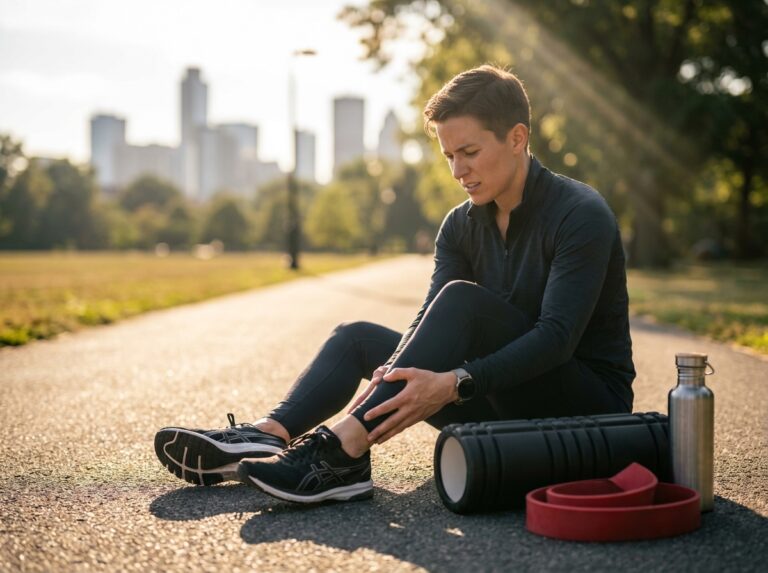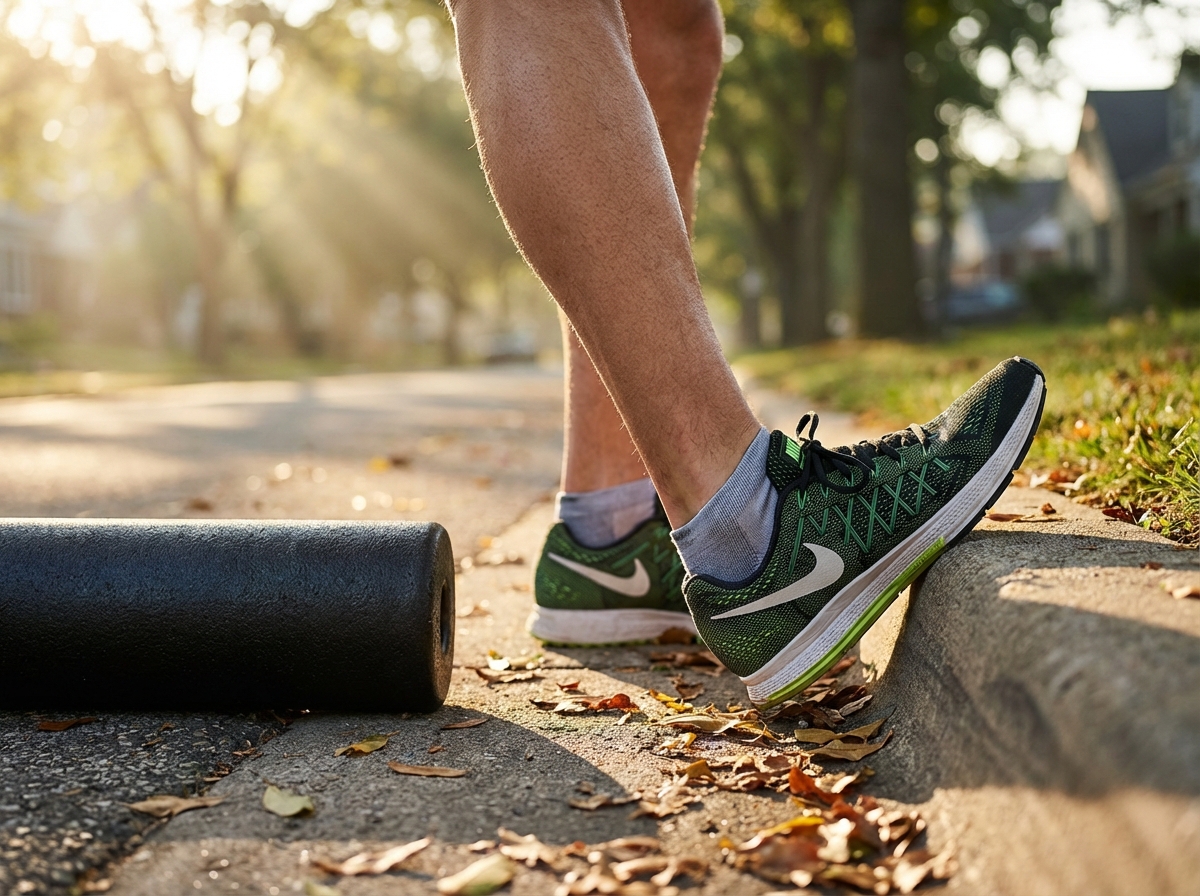
Plantar fasciitis is a common cause of heel pain in runners that can derail training and daily life. This article explores causes, up-to-date evidence-based treatments, and practical stretches and strengthening routines to restore mobility. Aimed at everyday athletes, the guide provides clear return-to-run strategies, prevention tips, and clinical red flags so runners can manage pain and stay consistent with training.
What Plantar Fasciitis Is and How It Develops
The plantar fascia is a thick band of connective tissue that runs along the bottom of the foot. It connects the heel bone to the base of the toes. This structure acts like a tension bridge. It supports the arch and helps the foot absorb impact during the running gait. For many years, people thought heel pain was purely an inflammatory issue, calling it plantar fasciitis. Modern research shows that the condition is usually a degenerative process known as plantar fasciosis. The tissue undergoes structural changes, including collagen breakdown and small tears rather than a simple inflammatory response. This shift in understanding is important for treatment; traditional anti-inflammatory methods might not work for chronic cases because the problem is structural wear.
Anatomy and Pathophysiology
The fascia consists of three distinct parts. The central component is the thickest and most commonly injured. It attaches to the medial calcaneal tubercle, the small bump on the inside of your heel bone. In a healthy runner, this tissue is strong and elastic. When a runner develops this condition, the fascia thickens. A Physiopedia report notes that the tissue often loses its organized structure. New blood vessels grow into the area in a disorganized way, representing a failed healing response. The body tries to repair the tissue but cannot keep up with the repetitive stress of running. This is why the pain often feels worse after a period of rest; the tissue stiffens and the damaged fibers are pulled tight when movement resumes.
Risk Factors for Runners
Several factors contribute to the development of this condition. Training load is the most significant driver. A 2025 prospective study found that runners who cover more than 40 kilometers per week have six times the risk of developing the injury compared to those running between 6 and 20 kilometers. Sudden changes in mileage or intensity can also trigger the issue. Biomechanics play a major role as well. Excessive ankle eversion during the stance phase—where the foot rolls inward too much while on the ground—is a known risk factor. Limited ankle dorsiflexion is another common problem. If calf muscles are tight, the ankle cannot bend properly, forcing the plantar fascia to stretch further than it should. Higher body weight and improper footwear also increase mechanical stress on the heel.
Symptoms and Clinical Presentation
The most common symptom is sharp pain at the bottom of the heel. This pain is usually most intense during the first few steps in the morning or after sitting for a long time. Runners often find that the pain decreases after a few minutes of walking or a light warm-up. However, it usually returns after a long run or a day spent standing. The pain is typically located at the medial calcaneal tubercle. If the condition is not managed, it can become chronic. The 2025 Foot Pain Trends Report indicates that many people suffer for years, with some respondents reporting chronic pain lasting over a decade. Early recognition is vital to prevent this long-term cycle.
Clinical Testing and Diagnosis
Healthcare providers use specific tests to confirm the diagnosis. The Windlass test is a standard tool where the provider pulls the big toe upward while the runner is standing or sitting. This action tightens the fascia; if this movement reproduces the heel pain, the test is positive. Palpation is also used, pressing on the medial calcaneal tubercle to check for tenderness. Most cases are diagnosed through these physical exams. Imaging is not always necessary, though an ultrasound can show if the fascia is thicker than 4 millimeters—a common sign of the condition. An MRI might be used if a partial tear is suspected or if pain does not improve with standard care.
Differential Diagnoses
Not all heel pain is plantar fasciitis. It is important to rule out other issues. Fat pad syndrome causes pain in the center of the heel, often due to the thinning of the protective fat layer under the bone. Tarsal tunnel syndrome involves the compression of the posterior tibial nerve, usually causing burning or tingling sensations. Achilles tendinopathy can also cause pain near the heel, but it is located higher up on the back of the foot. Stress fractures of the calcaneus are another possibility, usually causing pain when the heel bone is squeezed from both sides. A partial tear of the fascia will cause sudden, sharp pain and often involves swelling or bruising.
| Metric | Evidence-Based Data (2025) |
|---|---|
| Incidence in Runners | 2.5% to 10% of the running population |
| High Volume Risk | 6x higher odds for runners >40 km/week |
| Peak Age Range | 40 to 60 years old |
| Recovery Window | 80% of cases resolve within 12 months |
| Prevalence in Foot Injuries | Accounts for 15% of all clinical foot cases |
Prognosis and Takeaways
The outlook for most runners is positive. Most people see significant improvement within a year of starting treatment. However, recovery is rarely fast. It requires patience and consistent load management. Coaches and runners should watch for early signs like morning stiffness. Modifying mileage early can prevent a minor ache from becoming a chronic injury. Focus on calf flexibility and gradual training progressions. If pain persists for more than a few weeks, seeking a professional evaluation is the best course of action. Understanding that this is a degenerative issue helps runners focus on long-term tissue health rather than just short-term pain relief.
Assessing Training Load and Biomechanics for Recovery
Managing Load and Activity Modification
Recovery from plantar heel pain depends on how you manage the stress placed on the tissue. Total rest often leads to deconditioning, which makes the fascia more sensitive when you try to run again. The goal is relative rest: modifying activity to stay below a specific pain threshold. Monitor symptoms during the activity, immediately after, and the following morning. If pain is sharp or increases the next day, the load was too high. Reducing weekly mileage is the first step. As noted in the risk factors, runners covering more than 40 km per week face significantly higher odds of developing the condition compared to those running 6 to 20 km. This suggests that moderate volume can be protective while high volume increases risk. You can find more details on these factors in this study on running distance and biomechanics.
Activity modification might involve switching some runs to low-impact options. Cycling, swimming, or using an elliptical trainer allows you to maintain cardiovascular fitness without repetitive vertical impact on the heel. If you continue to run, use a run-walk strategy. This breaks up the cumulative load and gives the fascia brief periods of recovery during the session. Start with short intervals like three minutes of running followed by one minute of walking.
Objective Metrics for Progress
Tracking recovery requires more than just guessing how the foot feels. Use these specific metrics every day to guide progression.
First Step Pain
Rate your pain on a scale of 0 to 10 when you first get out of bed. This is a primary indicator of how the fascia is responding to the previous day’s load. A score of 3 or higher suggests you need to scale back.
Pain During and After Running
Pain should stay below a 2 or 3 during the run. It should not cause you to limp or change your gait. If the pain lingers for more than two hours after you finish, the intensity or duration was too much.
Weekly Mileage and RPE
Keep a log of your total distance and your perceived exertion. Sudden spikes in either metric are common triggers for flare-ups. Aim for gradual increases of no more than 10 percent per week in total volume.
Biomechanical Factors and Gait Changes
How you move affects the tension on the plantar fascia. Current research highlights that maximal ankle eversion during the stance phase is a significant risk factor. When the ankle rolls inward excessively, it stretches the fascia under load. Increasing your cadence can help. By taking more steps per minute, you naturally shorten your stride and reduce the impact forces at the heel. Aim for a 5 to 10 percent increase in your current steps per minute.
Step length and foot strike also matter. Overstriding, where the foot lands far in front of the body, increases braking force and heel impact. Transitioning toward a midfoot strike can sometimes alleviate direct pressure on the calcaneal tubercle. However, do not force a change to a forefoot strike too quickly, as this can shift the load to the Achilles tendon. A slight toe-out position during gait may also be protective for some runners according to recent biomechanical observations.
Phased Return to Run Plans
These plans assume you can perform a single-leg calf raise without sharp pain. If you cannot, focus on strength before starting these progressions.
6-Week Phased Plan for Mild Symptoms
| Week | Activity Type | Frequency | Intensity/Target |
|---|---|---|---|
| 1-2 | Run-Walk (2 min run / 1 min walk) | 3 days/week | Easy pace, 20 mins total |
| 3-4 | Run-Walk (4 min run / 1 min walk) | 3-4 days/week | Easy pace, 30 mins total |
| 5-6 | Continuous Running | 4 days/week | 70% of baseline mileage |
12-Week Phased Plan for Chronic Cases
| Phase | Duration | Focus | Target |
|---|---|---|---|
| Phase 1 | Weeks 1-4 | Walking and Strength | 30 min brisk walk, no pain |
| Phase 2 | Weeks 5-8 | Intro to Running | 1 min run / 2 min walk intervals |
| Phase 3 | Weeks 9-12 | Volume Building | Increase run time by 10% weekly |
Footwear and Surface Selection
The shoes you wear and the ground you run on influence tissue stress. For runners with active plantar fasciitis, shoes with a higher heel-to-toe drop can reduce the stretch on the fascia and calf muscles. Orthotics or heel cups may provide temporary relief by redistributing pressure away from the painful area. Avoid running on very hard surfaces like concrete when returning from injury. Synthetic tracks or level dirt paths offer more shock absorption. Rotate your shoes to ensure the cushioning has time to recover and replace them every 300 to 500 miles.
When to Seek Professional Help
Self-management is effective for many, but some situations require a specialist. Refer for a formal gait analysis if pain persists despite load modification. Strength testing is also vital. A healthy runner should be able to complete 25 to 30 single-leg calf raises with good form. If you have a significant imbalance between legs or cannot reach this threshold, targeted strengthening is necessary. Seek a biomechanical intervention if you notice visible gait compensations that lead to pain in the knee or hip.
Monitoring Checklist for Athletes
Daily Checklist
- Morning pain score (0-10)
- Pain during daily walking
- Compliance with prescribed stretches or exercises
- Quality of sleep and recovery
Weekly Checklist
- Total running mileage
- Total cross training minutes
- Average pain score for the week
- Single leg calf raise rep max (test once per week)
Evidence-Based Treatments and When to Use Them
The hierarchy of treatment for runners starts with high-quality evidence measures that address tissue tolerance. Research through 2025 confirms that most cases resolve within a year with conservative care. The first step involves education plus load modification. Reducing volume is the most effective way to settle symptoms, particularly for those exceeding the 40-kilometer weekly threshold associated with higher risk.
First Line Conservative Measures
Education is the foundation of recovery. Runners must understand that the plantar fascia is not just a passive cord but a dynamic structure that responds to load. Plantar fascia-specific stretching has shown superior results compared to general calf stretching. This involves pulling the toes into extension while the ankle is flexed. Strengthening the calf and foot through heavy slow resistance training is another high-evidence intervention. This approach builds the capacity of the tissue to handle the impact of running. Heel lifts can provide immediate relief by reducing the tension on the fascia during the gait cycle. These are typically used for two to four weeks while the initial inflammation subsides. Most runners see a change in symptoms within four to six weeks of consistent loading and stretching.
Adjunct Therapies and Orthoses
Orthoses and shoe modifications serve as useful tools for short-term pain management. Prefabricated inserts are often as effective as expensive custom versions for typical cases. They work by redistributing pressure away from the heel. Taping techniques like the low Dye or specific plantar fascia taping provide temporary relief for about one week. This is a great way to test if a runner will respond well to orthotics. Night splints are another option for those who experience intense pain with their first steps in the morning. They keep the fascia in a lengthened position overnight to prevent the tissue from tightening. Manual therapy, including joint mobilization, can help if there is a restriction in ankle dorsiflexion. However, manual therapy should never be the only treatment; it works best when paired with an active exercise program.
Advanced Interventions and Injections
When conservative measures do not yield results after three months, we look at extracorporeal shockwave therapy. Both focused and radial shockwave have strong evidence for chronic cases. This treatment uses pressure waves to stimulate a healing response in the fascia. It is generally safe with side effects limited to temporary bruising or soreness. Corticosteroid injections are common but require caution. They offer significant pain relief for about four to six weeks, but they do not fix the underlying issue and carry a small risk of plantar fascia rupture. This risk is higher in runners who return to high-impact activity too quickly after the injection. Biologics like PRP have shown some promise in recent meta-analyses, but the evidence remains conflicting compared to shockwave therapy. Dry needling is sometimes used for trigger points in the calf, but its direct effect on the fascia is still under debate in 2025 literature.
| Treatment Option | Evidence Strength | Typical Timeline | Best For |
|---|---|---|---|
| Load Management | High | 4 to 12 weeks | All runners |
| PF Stretching | High | 2 to 4 weeks | Morning pain |
| Shockwave (ESWT) | High | 8 to 12 weeks | Chronic cases |
| Orthotics | Moderate | 1 to 4 weeks | Acute relief |
| Injections | Low to Moderate | 1 to 2 weeks | Short term only |
Clinical Algorithm for Progression
The first phase of treatment lasts four weeks and focuses on settling the pain. This includes reducing weekly mileage to under 20 kilometers and performing daily fascia stretches. If pain scores do not improve by 30 percent, we move to the second phase. This phase adds heavy calf raises and potentially night splints. By week eight, if the runner cannot walk for 30 minutes without pain, we consider a referral for gait analysis or orthotics. Recent data highlights that excessive ankle eversion is a key risk factor; addressing this through footwear or form cues like a slight toe-out position can be protective. We only consider surgical options like a plantar fasciotomy after six to twelve months of failed conservative care. Surgery has a long recovery time and mixed success rates in elite athletes.
Red Flags and Urgent Referrals
Clinicians and coaches must watch for signs that the issue is not plantar fasciitis. Constant pain that does not change with rest or activity is a red flag. Numbness or tingling in the foot suggests nerve involvement like tarsal tunnel syndrome. Significant swelling or bruising after a sudden pop could indicate a fascia rupture. If a runner has night pain that prevents sleep or systemic symptoms like fever, they need an urgent medical referral. Most runners can stay active by using current guidelines for moderate volume and biomechanical adjustments. Staying within the 6 to 20 kilometer range per week during recovery is often protective while the tissue heals.
Targeted Stretches Strengthening and Mobility Exercises for Runners
Effective recovery from plantar fasciitis requires a shift from passive rest to active loading. The goal is to build a foot that can handle the specific demands of running. This involves a combination of targeted stretching, heavy slow resistance, and mobility work. Recent data suggests that runners who manage their volume and address biomechanical factors like ankle eversion have better outcomes. The following routines are designed to improve tissue tolerance and restore full function.
Plantar Fascia Specific Stretch
This stretch uses the windlass mechanism to tension the plantar fascia directly. Sit with the affected leg crossed over the opposite knee. Use your hand to pull the toes back toward the shin until you feel a firm stretch in the arch of the foot. The rationale is to improve the extensibility of the fascia and reduce sensitivity during the first steps of the day. Hold the stretch for 30 seconds. Perform 3 repetitions twice daily. A common technique fault is failing to pull the big toe back enough. This extension is what creates the necessary tension in the plantar tissues.
Gastrocnemius and Soleus Stretches
Tightness in the calf muscles increases the tensile load on the heel. To stretch the gastrocnemius, stand with one foot back and the knee straight. Lean forward until you feel a pull in the upper calf. To target the soleus, perform the same movement but bend the back knee slightly. The rationale is that a flexible calf reduces the compensatory strain on the foot during the push-off phase of running. Hold each position for 45 seconds. Complete 3 sets daily. Avoid bouncing during the stretch. Progression involves performing these on a slant board to increase the dorsiflexion angle.
High Load Strength Training
Heel raises are the foundation of plantar fasciitis rehabilitation. Stand on the edge of a step with a rolled-up towel placed under your toes. This towel ensures the toes are extended, which engages the fascia. Rise up on both feet for a count of 3 seconds. Hold for 2 seconds. Lower down for a count of 3 seconds. The rationale is that heavy loading stimulates collagen repair and increases the load-bearing capacity of the tissue. Start with 3 sets of 12 repetitions every other day. Progress to single-leg versions once the double-leg version is pain-free. Eventually, add weight using a backpack or dumbbells. Common faults include moving too quickly or allowing the ankle to wobble.
Intrinsic Foot Strengthening
The small muscles inside the foot provide essential support for the arch. The short foot exercise involves pulling the ball of the foot toward the heel without curling the toes. This creates a visible dome in the arch. The rationale is to improve the active stability of the foot. Hold the contraction for 5 seconds. Perform 15 repetitions daily. You can also include toe curls or towel scrunches. These drills help prevent the excessive ankle eversion often seen in runners with heel pain. A common fault is gripping the floor with the toenails instead of using the deeper muscles.
Balance and Proprioception Drills
Running is essentially a series of single-leg hops. Stand on one leg on a flat surface and maintain your balance for 60 seconds. The rationale is to improve the neuromuscular control of the foot and ankle complex. Perform this 3 times on each side daily. Progress by closing your eyes or standing on an unstable surface like a foam pad. This helps the body manage the impact forces of running more efficiently. Avoid leaning your upper body to stay upright.
Neural Mobility
If you experience tingling or burning sensations, nerve sensitivity may be a factor. Seated nerve glides can help. Sit on a chair and slump your back. Straighten the affected leg and flex your foot toward your face. Point your toes away as you look up at the ceiling. Flex your foot as you look down at your chest. This flossing motion helps the nerves move freely through the surrounding tissues. Perform 10 repetitions twice a day. Stop if symptoms increase. This exercise is only necessary if nerve involvement is suspected.
Self Massage and Manual Release
Rolling a lacrosse ball under the arch can provide temporary relief. Use moderate pressure for 2 minutes before or after activity. The rationale is to desensitize the area and improve local blood flow. Avoid aggressive rolling if the heel is acutely inflamed or if the pressure causes sharp pain. This tool is for symptom management rather than structural change. It should be used as a supplement to the strengthening program.
8-Week Strengthening and Mobility Program
This program follows a progressive loading model. Monitor your pain levels daily. If pain exceeds a 3 out of 10 during exercise or is worse the next morning, regress to the previous week.
| Weeks | Focus | Milestones |
|---|---|---|
| 1-2 | Pain Management | Perform daily stretches and double-leg heel raises. Focus on form and consistency. |
| 3-4 | Initial Loading | Transition to single-leg heel raises. Increase the hold time at the top of the movement. |
| 5-6 | Heavy Resistance | Add external weight to heel raises. Begin basic balance drills on uneven surfaces. |
| 7-8 | Impact Readiness | Introduce light plyometrics like small hops. Prepare for a gradual return to running. |
Progression and Regression Rules
Progress only when the current load is tolerated with minimal discomfort. If you experience a flare-up, reduce the volume of heel raises by half for two sessions. Research indicates that Running Distance and Biomechanical Risk Factors for Plantar Fasciitis are closely linked. Managing your weekly mileage while following this strength routine is the most effective way to ensure lasting mobility. Avoid aggressive plyometrics or high-intensity running until you can perform 15 single-leg heel raises with extra weight without pain.
Frequently Asked Questions
Can I keep running with plantar fasciitis?
You can usually continue running if you modify your volume and intensity. The key is finding a threshold that does not aggravate the tissue. Since high mileage is a primary risk factor, dropping your volume to the 6 to 20 kilometer range often acts as a protective measure. You should use a pain scale to guide your runs. If your pain is higher than a 3 out of 10 during the run or if you feel increased stiffness the next morning, you have exceeded your current capacity. Avoid hills and speed work because these activities increase the load on the fascia significantly. Focus on flat, even surfaces until your symptoms stabilize.
How long will recovery take?
Recovery timelines vary based on how long you have had the symptoms. About 80 percent of people see significant improvement within 12 months of starting conservative treatment. If you catch it early, you might see a return to full activity in 4 to 8 weeks. However, chronic pain can persist for 1 to 5 years in some cases, highlighting why early intervention is so important. You should expect progress to be gradual rather than immediate. Your recovery depends on how well you manage the load on your foot and how consistently you perform strengthening exercises. Rushing the process usually leads to a cycle of re-injury.
Do orthotics and heel lifts work?
Orthotics and heel lifts are effective for short-term symptom management. They work by reducing the mechanical strain on the plantar fascia during the gait cycle. Heel lifts are especially useful if you have limited ankle dorsiflexion or tight calves because they reduce the tension required from the fascia. You should use them as a temporary tool to stay mobile while you work on the underlying strength issues. If you have very flat or very high arches, a semi-rigid orthotic can help redistribute pressure. Once you have completed the 8-week strengthening program and your foot can handle more load, you can gradually transition away from these inserts.
Are steroid injections safe?
Steroid injections can provide rapid pain relief, but they are not a first-line treatment. They are appropriate when pain is so severe that it prevents you from performing basic rehabilitation exercises or daily tasks. You must be aware of the risks, which include fat pad atrophy and a potential rupture of the plantar fascia. Most medical professionals recommend waiting at least six months before considering an injection. They do not address the biomechanical causes like excessive ankle eversion. If you choose an injection, you should still continue with your mobility and strengthening routines.
Do night splints help?
Night splints are highly effective for managing the sharp pain felt during the first steps in the morning. They work by holding the foot in a neutral position, which prevents the fascia from shortening and tightening while you sleep. While they can be uncomfortable and may disrupt sleep for some, the consistent low-load stretch they provide is backed by strong evidence. If a hard plastic splint is too bulky, you can try a Strassburg sock. These are often better tolerated and provide a similar benefit. Use them during the acute phase of your recovery to make your mornings more manageable.
What exercises should I avoid?
You should avoid any high-impact plyometric exercises like box jumps, jumping rope, or burpees during the early stages of healing. These movements place a massive amount of sudden force on the heel. You should also be cautious with barefoot walking on hard floors at home. Stretching is beneficial, but avoid “aggressive” stretching where you pull your toes back with extreme force if it triggers sharp, stabbing sensations. If an exercise causes your pain to spike and stay elevated for more than 24 hours, it is too much for your current state.
When should I get imaging?
Imaging is usually unnecessary for an initial diagnosis because the symptoms are very distinct. A physical exam is often enough to confirm the condition. You should consider an X-ray or MRI if your symptoms do not improve after three months of consistent physical therapy. Imaging is useful for ruling out other issues like calcaneal stress fractures or nerve entrapment. If an X-ray shows a heel spur, do not be alarmed. About 50 percent of people with this condition have spurs, but they are often a result of the tension rather than the cause of the pain itself.
Is surgery ever necessary?
Surgery is a last resort and is only considered for about 5 percent of cases. It is typically only an option after 12 months of failed conservative treatment. The most common procedure involves a partial release of the fascia. While many runners do return to their sport, the outcomes are not guaranteed. Surgery can lead to a loss of arch height or persistent foot instability. Given that 80 percent of runners recover with non-invasive methods, you should focus all your efforts on the strengthening and mobility protocols first.
How can I prevent the pain from coming back?
Prevention is about maintaining the balance between training load and tissue capacity. Keep your weekly mileage increases small and avoid sudden spikes in intensity. Recent biomechanical data suggests that a slight “toe-out” foot position during running might reduce the risk of developing this condition. Continue with your calf mobility and intrinsic foot strengthening even after you are pain-free. Check your running shoes for wear every 300 to 500 miles. If your BMI is over 25, maintaining a healthy weight can significantly reduce the daily load on your feet.
Key Takeaways and Action Plan
Managing plantar fasciitis requires a shift from passive rest to active load management. Recent data shows that 63 percent of Americans have experienced acute foot pain in the past year. For runners, the risk is specific, with high-volume training (>40 km/week) significantly increasing the odds of injury. This highlights the importance of a structured plan that balances tissue healing with progressive strengthening.
Acute Management Checklist for Weeks 1 and 2
The goal during the first two weeks is to calm the inflamed tissue and reduce the sharp morning pain. Follow these steps to manage the initial phase effectively.
- Modify running volume immediately
Reduce your weekly mileage by at least 50 percent or stop running entirely if pain exceeds a 3 out of 10 on a visual scale. - Implement the ice bottle roll
Roll your foot over a frozen water bottle for 10 minutes twice a day to provide local analgesia. - Wear supportive footwear indoors
Avoid walking barefoot on hard surfaces. Use a cushioned slipper or a recovery slide to reduce the direct impact on the heel. - Perform gentle big toe extensions
Manually pull your big toe back toward your shin for 30 seconds to stretch the fascia without aggressive loading. - Check for excessive ankle eversion
A 2025 study in Medicine & Science in Sports & Exercise found a significant link between ankle eversion angles and injury risk. Consider a temporary heel lift to stabilize the foot.
Rehabilitation and Strengthening Plan for Weeks 4 to 8
Once the sharp pain subsides, you must build the capacity of the plantar fascia to handle the loads of running. This phase focuses on the Rathleff protocol and calf strength.
| Exercise | Frequency | Sets and Reps | Progression Note |
|---|---|---|---|
| High Load Toe Raises | Every other day | 3 sets of 8 to 12 reps | Place a towel under the toes to increase extension. |
| Seated Calf Raises | 3 times per week | 3 sets of 15 reps | Focus on the slow eccentric lowering phase. |
| Single Leg Balance | Daily | 3 sets of 60 seconds | Maintain a neutral arch without gripping the floor. |
| Ankle Inversion Work | 3 times per week | 2 sets of 20 reps | Use a resistance band to strengthen the tibialis posterior. |
During these weeks, you can begin a walk-to-run progression. Start with 1 minute of easy running followed by 2 minutes of walking. Only increase the running duration if the foot feels stable the next morning. According to Plantar Fasciitis – StatPearls, this condition accounts for 10 percent of all runner-related injuries, so patience during this phase is vital for long-term success.
When to Escalate Care
Most cases resolve with conservative care, but some require specialist intervention. You should seek a referral for imaging or a podiatry consult if you experience certain red flags. Persistent night pain that prevents sleep or numbness in the heel can indicate nerve entrapment rather than simple fasciitis. If you have followed a dedicated loading program for 8 weeks with zero improvement in morning pain levels, an ultrasound or MRI may be necessary to rule out a partial tear or calcaneal stress fracture. Specialists can also evaluate if you fall into the 33 percent of cases that become bilateral, requiring a more comprehensive systemic approach.
Long Term Prevention and Maintenance
Prevention is built on monitoring training loads and maintaining joint health. Keep your weekly mileage increases below 10 percent to avoid the risk spike associated with high volumes. Footwear checks are essential. Replace running shoes every 300 to 500 miles, as foam degradation reduces the shock absorption needed to protect the heel. Regular mobility work should focus on the entire posterior chain. Tight calves are a primary risk factor, so daily eccentric heel drops should remain part of your routine even after the pain is gone. Monitoring your gait for excessive eversion can also help, as recent biomechanical evidence suggests this is a key predictor for recurrence.
Realistic Timelines and Goal Setting
Recovery is rarely a straight line. Data shows that 80 percent of patients improve significantly within 12 months, but for runners, the return to peak performance usually takes 3 to 6 months. Set measurable goals that are not just about pain. Your first goal might be walking 30 minutes pain-free. The second could be completing a 5k without morning stiffness the next day. By focusing on these milestones, you can track progress even when the healing feels slow. Consistent running is possible if you respect the tissue’s need for gradual adaptation. Stay focused on the strengthening exercises and the results will follow.
Sources
- Running Distance and Biomechanical Risk Factors for Plantar Fasciitis — Results: The total incidence of PF was 2.3% (28 PF from 1206 participants), 2.5% in runners and 2.0% in non-runners (P = 0.248). Runners who ran …
- Plantar Fasciitis – Physiopedia — Most prevalent and peak incidence is among 40 to 60 years of age and it accounts for 15% of foot injuries in the general population. Estimated to account for 8% …
- A systematic review of running-related musculoskeletal injuries in … — The mean injury incidence was 40.2%, and the mean prevalence was 44.6%. Anatomical locations: Incidence: Knee (27.0%, ankle (25%), lower leg (23 …
- Plantar Fasciitis – StatPearls – NCBI Bookshelf – NIH — This condition accounts for about 10% of runner-related injuries and 11% to 15% of all foot symptoms requiring professional medical care.
- Active Voice | Running Distance, Biomechanics & Plantar Fasciitis — We discovered that runners who ran more than 40 km per week had six times higher odds of developing PF compared to those who ran 6-20 km per week.
- Plantar Fasciitis Statistics (2025) – Garage Gym Reviews — In fact, 42% of middle-distance runners and 25% of long-distance runners10 are estimated to have plantar fasciitis.
- 2025 Foot Pain Trends Report | KURU Footwear — Plantar fasciitis remains the most commonly reported cause of heel pain, affecting 11% of survey respondents in 2025. This condition arises when the plantar …
- Heel Pain in Runners – More than Just Plantar Fasciitis! – Physiotutors — The incidence of Plantar Fasciitis in runners ranges from 4.5 to 10% and represents the third most frequently experience running-related …
- How To Treat And Beat Plantar Fasciitis – RUN | Powered by Outside — Approximately 10 percent of runners will have plantar fasciitis in their careers. … Ginader: One of the major things taught in school, at least …
- Plantar Fasciitis – AAFP — Plantar fasciitis is associated with a variety of sports but is mostly reported in recreational and elite runners (incidence of 5% to 10%).
Legal Disclaimers & Brand Notices
The information provided in this article is for informational and educational purposes only and does not constitute professional medical advice, diagnosis, or treatment. Always seek the advice of a physician or other qualified healthcare professional with any questions you may have regarding a medical condition or before undertaking any new health care regimen, exercise program, or medical procedure described herein. Reliance on any information provided in this article is solely at your own risk.
All product names, logos, and brands mentioned in this content are the property of their respective owners. All company, product, and service names used in this article are for identification purposes only. Use of these names, logos, and brands does not imply endorsement or affiliation.