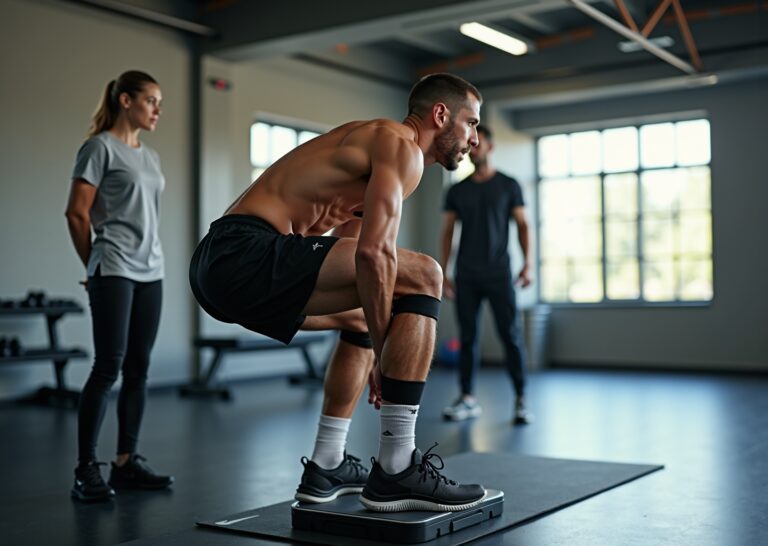
Shoulder impingement is common among runners, lifters, and everyday athletes. This article explains causes, assessment, safe mobility and strengthening exercises, and what to avoid to recover without setbacks. You’ll get practical progressions, programming tips, and clear red flags that call for professional evaluation so you can regain pain-free overhead function and stay active with evidence-based, time-efficient routines for busy athletes.
When to modify training and how to triage your shoulder
So you’ve got that familiar ache in the front or side of your shoulder. You’ve read about what impingement is, but the big question remains: what do you do now? Pushing through pain is often glorified in fitness culture, but when it comes to joint health, it’s a fast track to a much longer sideline. The key is learning to listen to your body and making smart, calculated decisions about your training. This isn’t about stopping; it’s about adapting so you can come back stronger.
The first step is to honestly assess where you are. Not all shoulder pain is created equal. We can break it down into three general categories to help you decide your next move. Think of this as your personal triage system.
- Mild Impingement: This is the “annoying but manageable” stage. You might feel a dull ache or a brief, sharp twinge during specific movements, like reaching overhead or during the last few reps of a set of presses. The pain is intermittent, usually below a 3 out of 10, and it doesn’t stop you from completing most activities. It might feel a bit sore after a workout, but it calms down quickly.
- Moderate Impingement: Now the pain is a more consistent training partner you didn’t ask for. It’s a constant ache, maybe a 4 to 6 out of 10, that clearly limits your ability to perform overhead movements. You find yourself modifying exercises, avoiding certain lifts, or cutting your runs short because of the discomfort. The classic “painful arc” when lifting your arm to the side is very obvious, and the shoulder might feel weak or stiff.
- Severe Impingement: This is when your shoulder is truly screaming for help. The pain is significant, often a 7 out of 10 or higher, and it’s not just present during activity. It might hurt at rest, and a key sign is night pain that wakes you up from sleep. You may also experience a noticeable loss of strength, making everyday tasks like lifting a gallon of milk difficult. Some people report a “catching” or “locking” sensation in the joint, along with a major loss of range of motion.
While this triage helps guide your training modifications, some symptoms are non-negotiable red flags. If you experience any of the following, it’s time to stop self-managing and seek an urgent medical review from a physician.
- Progressive weakness that gets noticeably worse over a couple of weeks.
- Acute, severe pain and weakness following a specific trauma, like a fall or a sudden, heavy lift.
- Numbness, tingling, or a “dead arm” sensation that travels down your arm. This could indicate nerve involvement, possibly originating from your neck.
- Systemic symptoms like fever, chills, or unexplained weight loss accompanying the shoulder pain.
If you’re in the mild-to-moderate category and have ruled out red flags, your immediate goal is load management. This doesn’t mean complete rest. It means finding your pain-free baseline. We call this relative rest. The rule is simple: if a movement causes sharp pain or increases your baseline ache above a 3/10, you need to modify or replace it. For short-term pain control, applying ice for 15 minutes a few times a day can be very effective, especially after activity. Over-the-counter non-steroidal anti-inflammatory drugs (NSAIDs) like ibuprofen can help reduce acute inflammation, but they are not a long-term solution. Think of them as a tool to calm things down for a few days while you modify your activities, not as a way to mask pain so you can keep training through it. Always consult with a pharmacist or doctor before taking any medication.
The good news is you don’t have to stop training altogether. Maintaining cardiovascular fitness and lower-body strength is crucial for both your physical and mental health. Runners can often continue by focusing on form to minimize aggressive arm swing or by switching to a stationary bike or elliptical. Lifters can focus on lower-body work. Goblet squats, leg presses, lunges, and Romanian deadlifts are all excellent options that place minimal stress on the shoulder. Just be mindful of your setup; for example, a safety squat bar might be more comfortable than a traditional back squat.
So, how long will this take? With a structured program of mobility and strengthening, like the one we’ll cover in the next section, around 70% of people with mild-to-moderate impingement see significant improvement within 6 to 12 weeks. Your first call should be to a qualified physical therapist. They are experts in movement and can provide a precise diagnosis and a rehabilitation plan tailored to you. If you aren’t seeing at least some improvement after about four weeks of consistent effort, it’s a good idea to check back in with your PT or see a sports medicine physician.
A doctor may consider further steps if your progress stalls. Imaging like an MRI or ultrasound is typically reserved for cases that don’t respond to several months of conservative care or if a significant tear is suspected. Similarly, a corticosteroid injection might be discussed. It’s important to understand that an injection is not a cure; it’s a powerful anti-inflammatory that can break the pain cycle, creating a valuable window to engage more effectively in your physical therapy exercises. Think of it as a tool to facilitate rehab, not replace it.
Safe mobility and strengthening exercises with progressions
After identifying your shoulder issue and managing the initial pain, the next step is a structured, progressive exercise plan. The goal isn’t just to chase the pain away but to correct the underlying movement patterns that caused it. This involves a three-part strategy. First, we restore mobility where it’s lacking. Second, we activate and stabilize the muscles that control the shoulder blade. Third, we strengthen the rotator cuff to keep the shoulder joint centered and secure. This approach builds a resilient shoulder from the ground up. This isn’t about pushing through pain; it’s about rebuilding capacity. We will approach this in phases, always using pain as our guide. A good rule is to keep any discomfort during these exercises below a 3 out of 10 on the pain scale. If pain increases afterward, you’ve done too much.
Phase 1: Restore Mobility and Calm the System (Weeks 1-2)
The initial focus is on creating space and improving movement quality without aggravating the sensitive tissues. These drills should feel like gentle stretches, not aggressive efforts.
Modified Sleeper Stretch
Purpose: To gently stretch the tight posterior capsule of the shoulder, which is a common issue in impingement. Research shows that modified posterior shoulder stretching is very effective at reducing pain and improving function. Cues: Lie on your affected side with your head supported by a pillow. Your bottom arm should be straight out in front of you at a 90-degree angle to your body, with the elbow also bent to 90 degrees, fingers pointing to the ceiling. Use your top hand to gently press the forearm of the affected arm down toward the floor. Stop when you feel a mild stretch in the back of your shoulder. Common Faults: Shrugging your shoulder toward your ear or letting your body roll backward. Keep your shoulder blade pinned back and down. Dosage: Hold for 30 seconds, repeat 3 times. Perform once daily. Regression: If this is painful, place a small rolled towel under your elbow to slightly elevate the arm. Reduce the range of motion.
Cross-Body Stretch
Purpose: Another way to target the posterior shoulder tissues. Cues: Stand or sit tall. Bring your affected arm across your chest. Use your other arm to gently pull it closer to your body by holding above the elbow. You should feel a stretch in the back of the shoulder. Common Faults: Twisting your torso or shrugging the shoulder. Keep your chest facing forward and the shoulder relaxed. Dosage: Hold for 30 seconds, repeat 3 times. Perform once daily. Progression: As it becomes more comfortable, you can gently increase the pull.
Thoracic Extension on Foam Roller
Purpose: Poor upper back posture can force the shoulder into a bad position. Improving thoracic mobility gives your shoulder blades a better surface to move on. Cues: Lie on a foam roller placed horizontally across your upper back, just below your shoulder blades. Support your head with your hands, keeping your neck relaxed. Gently extend your upper back over the roller, lowering your head toward the floor. Hold for a moment, then return to the start. Common Faults: Arching your lower back. Keep your core engaged and focus the movement on your upper spine. Dosage: Perform 10-15 slow repetitions, moving the roller to a few different spots on your upper back. Do this daily or before workouts. For Runners: This is crucial for combating the rounded posture that can develop during long runs.
Phase 2: Build Scapular Control (Weeks 3-4)
Once you have better mobility, you need to teach your shoulder blade (scapula) how to move correctly and provide a stable base for your arm. Studies highlight that scapular muscle training is a cornerstone of successful shoulder rehab.
Scapular Clocks
Purpose: To improve your awareness and control of the small movements of the shoulder blade. Cues: Stand facing a wall with your arm straight out at shoulder height, hand on the wall. Without bending your elbow, imagine a clock face on the wall. Gently move your shoulder blade to glide your hand toward 12 o’clock (elevation), 3 o’clock (retraction), 6 o’clock (depression), and 9 o’clock (protraction). Make the movements small and controlled. Common Faults: Bending the elbow or moving your entire torso. Isolate the movement to just the shoulder blade. Dosage: 2-3 circles in each direction, for 2 sets. Progression: Perform the exercise without the wall for feedback, focusing purely on muscle control.
Wall Slides (or Y-T-W-L)
Purpose: To activate and strengthen the key scapular stabilizers like the lower trapezius and serratus anterior. Cues: Stand with your back against a wall, feet slightly away. Place your forearms on the wall in a “W” position, keeping your wrists and elbows in contact with the wall. Slowly slide your arms up the wall toward a “Y” position, focusing on setting your shoulder blades down and back. Only go as high as you can without pain or your back arching. Common Faults: Shrugging your shoulders up, letting your lower back arch away from the wall. Dosage: 2-3 sets of 8-12 slow repetitions. Regression: If wall contact is too difficult, perform these lying face down on the floor (Y-T-W-L raises), lifting your arms just an inch off the ground.
Serratus Anterior Punches
Purpose: The serratus anterior is a key muscle for holding your scapula against your ribcage, which is vital for overhead movements. Cues: Lie on your back holding a light dumbbell or kettlebell straight up over your chest. Keeping your elbow straight, “punch” the weight toward the ceiling by pushing your shoulder blade forward and away from the floor. Hold for a second, then slowly lower back down. Common Faults: Bending the elbow. The movement comes entirely from the shoulder blade. Dosage: 2-3 sets of 12-15 repetitions. For Lifters: This is a fantastic prehab drill before bench pressing to ensure proper scapular movement.
Phase 3: Rotator Cuff and Integrated Strengthening (Weeks 5-8+)
With a mobile and stable foundation, you can now begin to strengthen the rotator cuff and integrate the shoulder into larger movement patterns. The key is starting light and focusing on perfect form.
Side-Lying External Rotation
Purpose: To strengthen the infraspinatus and teres minor, crucial external rotators that help control the humeral head. Cues: Lie on your non-affected side with a small towel rolled up under your armpit on the working side. Hold a very light dumbbell (1-5 lbs) with your elbow bent to 90 degrees. Keeping your elbow tucked into your side, slowly rotate your forearm up toward the ceiling. Common Faults: Lifting your elbow off your side or using momentum. This should be a slow, controlled rotation. Dosage: 3 sets of 10-15 repetitions. Progression: Gradually increase the weight, but never at the expense of form.
Incline Push-Ups
Purpose: To reintroduce pressing in a safe, controlled manner that builds strength in the chest, shoulders, and serratus anterior. Cues: Place your hands on a wall, countertop, or elevated barbell. The higher the incline, the easier it is. Keep your body in a straight line from head to heels. Lower your chest toward the surface, keeping your shoulder blades pulled back and down. Press back up, finishing with a slight “punch” forward to engage the serratus. Common Faults: Letting your hips sag or shrugging your shoulders. Dosage: 3 sets of 8-12 repetitions. Progression: Gradually lower the incline over weeks until you can perform a full push-up on the floor without pain.
Landmine Press
Purpose: A safe entry point to overhead pressing. The angled path is much more shoulder-friendly than a strict vertical press. Cues: Stand facing a landmine attachment (or a barbell wedged in a corner). Hold the end of the barbell with one hand at shoulder height. Press the weight up and forward, allowing your shoulder blade to move naturally around your ribcage. Common Faults: Arching the lower back. Keep your core tight. Dosage: 3 sets of 8-10 repetitions per side with very light weight. Progression for Lifters: This is your bridge back to overhead pressing. Once you can do this pain-free with moderate weight, you can test a single-arm dumbbell overhead press, and eventually, a barbell press, but only after meeting the return-to-sport criteria.
Exercises and Movements to Avoid
Just as important as doing the right exercises is avoiding the wrong ones. Certain movements inherently close down the subacromial space or encourage the poor mechanics we’re trying to fix. While you’re recovering, it’s best to remove these from your routine entirely.
What to Avoid
Upright Rows: This exercise combines significant internal rotation with abduction, a position that directly compresses the rotator cuff tendons against the acromion. It’s one of the most direct ways to provoke impingement symptoms.
Behind-the-Neck Presses or Pulldowns: These movements force the shoulder into an extreme range of external rotation and horizontal abduction, placing high stress on the front of the shoulder capsule and the rotator cuff tendons.
Dips: When performed without excellent control, dips can allow the head of the humerus to glide forward, straining the anterior structures of the shoulder. If you must do them, ensure your shoulders don’t roll forward at the bottom of the movement.
Uncontrolled Kipping Movements: The dynamic and often uncontrolled nature of kipping pull-ups or muscle-ups can be too stressful for an already irritated shoulder. Stick to strict movements until your shoulder is fully recovered and stable.
Safe Progressions Back to Performance
The ultimate goal is to return to your activities pain-free. This requires a smart, gradual reintroduction of more complex movements.
For Lifters
Modify your pressing movements. Swap barbell overhead presses for a landmine press or a single-arm dumbbell press with a neutral grip. These variations are more friendly to the natural movement of the scapula. For chest pressing, start with incline push-ups, which reduce the load and demand on the shoulder. As you get stronger and remain pain-free, you can lower the incline until you’re back on the floor.
For Runners and Everyday Athletes
Your focus should be on postural endurance. The same strengthening exercises, like Y-T-W-Ls and banded pull-aparts, are crucial. Poor posture during a long run, where the shoulders slump forward, can contribute to impingement. Incorporate these exercises into your warm-up or as part of a separate strength routine to build the endurance needed to maintain good form when you’re fatigued.
A Sample 6-Week Progression Plan
- Weeks 1-2: Focus on Phase 1 mobility drills daily. Add Phase 2 scapular clocks and wall slides (regression if needed) 3 times per week. Pain should be minimal.
- Weeks 3-4: Continue mobility drills as a warm-up. Progress the Phase 2 exercises. Introduce serratus punches and side-lying external rotation with very light weight, 3 times per week.
- Weeks 5-6: Use mobility and activation drills as a warm-up. Increase the weight slightly on strengthening exercises. Introduce Phase 3 incline push-ups and landmine presses, starting with low volume and no weight.
- Weeks 7-8 and beyond: Continue to progress strength exercises by slowly adding weight or reps. Gradually lower the incline on push-ups. Only return to heavy or overhead lifting once you have full, pain-free range of motion and symmetrical strength compared to your uninjured side.
Prehab and Warm-Up Mini-Routine (5-10 Minutes)
Before any workout, especially for runners and lifters, perform this routine:
- Thoracic Extension on Foam Roller (1 minute)
- Cross-Body Stretch (30 seconds per side)
- Scapular Clocks (1 set of 2 circles each way)
- Banded Pull-Aparts (2 sets of 15)
- Side-Lying External Rotation (1 set of 10 per side, no weight)
This prepares the tissues and activates the key stabilizers, reducing the risk of re-injury. Remember, consistency is more important than intensity. Listen to your body, respect pain signals, and progress patiently.
Frequently Asked Questions
You’ve learned the “how” in the last section. Now let’s tackle the “what ifs” and the “whys.” When you’re dealing with a nagging shoulder, questions pop up constantly. Here are straightforward, evidence-based answers to the most common questions we hear from athletes and coaches about navigating shoulder impingement.
Can I keep lifting heavy with shoulder impingement?
The short answer is no, not in the same way. Continuing to lift heavy through sharp pain is a recipe for turning a minor issue into a major one. You must modify your training. This means reducing the load significantly, often to 50-70% of your usual weight, and focusing entirely on pain-free movement. The goal is to train around the injury, not through it.
Your first step is to identify and eliminate the specific lifts that cause that pinching sensation. For most people, this includes barbell overhead presses and wide-grip bench presses. Replace them with shoulder-friendly alternatives like landmine presses or neutral-grip dumbbell presses. If you feel any sharp pain during a lift, stop immediately. Persistent pain or an inability to find pain-free alternatives is a clear sign to seek hands-on evaluation from a physical therapist.
How long will it take for my shoulder to get better?
Recovery timelines vary widely and depend on the severity of the impingement, your consistency with rehab, and how well you manage your daily activities. For mild cases, you might feel significant improvement in 4 to 6 weeks. More persistent, moderate cases often require 8 to 12 weeks of dedicated work. The key is patience and consistency.
Research consistently shows that a structured exercise program is highly effective, with about 70% of individuals improving significantly within three months. If you’ve been diligent with your mobility and strengthening exercises for four weeks and see zero improvement, it’s time to get a professional assessment. Progress isn’t always linear; some weeks will feel better than others, but the overall trend should be positive.
Are push-ups bad for shoulder impingement?
Standard floor push-ups can definitely aggravate an impinged shoulder, but that doesn’t mean all push-ups are off-limits. The problem is often the angle. A flat, horizontal position can close down the space in the shoulder joint and cause that familiar pinch, especially if your elbows flare out wide. The solution is to change the angle.
Start with incline push-ups, placing your hands on a wall, a kitchen counter, or a sturdy box. The higher the incline, the less stress on your shoulder. As you get stronger and your pain subsides, you can gradually decrease the incline. Focus on keeping your elbows tucked at about a 45-degree angle to your body and maintaining stable shoulder blades. If you feel pain at the bottom of the movement, you’ve gone too far.
Should I stop running?
For most people, there’s no need to stop running. The act of running doesn’t directly load the shoulder joint in a harmful way. However, your running *form* can contribute to the problem. If you run with a tense upper body, rounded shoulders, and a forward head posture, you’re holding your shoulder in a compromised position for an extended period.
Use this as an opportunity to focus on your running posture. Think about running “tall” with your chest up and shoulder blades gently pulled back and down. A relaxed arm swing is crucial. If you notice your shoulder pain gets worse during or after a run, it’s a strong signal that your upper body mechanics need attention. Adding thoracic spine mobility drills to your warm-up can make a big difference.
Is a cortisone injection a good idea?
A cortisone shot can be a useful tool but it is not a long-term solution. Cortisone is a powerful anti-inflammatory that can provide significant short-term pain relief for 60-80% of people. This can create a valuable window of opportunity where your pain is low enough to effectively engage in the strengthening and mobility exercises needed to fix the underlying problem.
Think of it as a way to calm things down so you can do the real work. It does not fix the mechanical issues causing the impingement. Relying on repeated injections without addressing the root cause of weakness or poor movement patterns is a poor strategy. Most physicians will limit injections to two or three per year in the same joint to avoid potential tissue damage.
When is surgery necessary?
Surgery is rarely the first or even second option for shoulder impingement. It is considered a last resort. The vast majority of cases resolve with conservative care like physical therapy and activity modification. In fact, fewer than 10% of people with impingement end up needing an operation.
Surgery is typically only discussed after you have completed at least six months of a dedicated, consistent rehabilitation program without meaningful improvement. A key red flag that might accelerate this conversation is a significant rotator cuff tear confirmed by an MRI, especially if it’s accompanied by progressive weakness that doesn’t improve with strengthening exercises.
Can I do overhead presses?
Eventually, yes, but you must earn the right to press overhead again. If you have active impingement pain, all traditional overhead pressing should stop immediately. Trying to push through it will only make things worse. You need to rebuild your foundation from the ground up.
Start with the pain-free mobility and activation drills from the previous section. Once those are comfortable, you can begin reintroducing overhead patterns with very gentle, modified movements like wall slides and landmine presses. The next step is often a single-arm dumbbell press with a neutral grip (palm facing inward), as this allows for more natural scapular movement. Only when you can do this with zero pain and good control should you even consider returning to a barbell.
How should I modify my bench press?
The traditional barbell bench press can be tough on shoulders with impingement because it locks your hands and shoulders into a fixed position. The easiest and most effective modification is to switch to dumbbells. This allows your shoulders to move through a more natural arc.
Using a neutral grip (palms facing each other) or a 45-degree angle grip is often more comfortable than the standard pronated grip. You should also reduce the range of motion; stop when your elbows are level with your torso instead of dropping them deep below the bench. Throughout the lift, focus on actively pulling your shoulder blades together and down, keeping them stable against the bench.
What stretches should I avoid?
More stretching is not always better, and the wrong stretches can make impingement worse. You should avoid any stretch that aggressively forces your arm across your body or behind your back. These positions can directly compress the rotator cuff tendons and bursa, aggravating the very tissues you’re trying to heal.
Specifically, avoid behind-the-back “handcuff” stretches or pulling your arm forcefully across your chest. Even the classic sleeper stretch can be problematic if done too aggressively. Instead, focus on gentle mobility. Thoracic spine extension over a foam roller and modified posterior capsule stretches are much safer and more effective for creating space in the shoulder.
Does my posture really matter that much?
Yes, it matters immensely. Think of your posture as the foundation upon which all your shoulder movements are built. A chronic slouched posture, with rounded shoulders and a forward head, causes your shoulder blade to tip forward. This shrinks the subacromial space, leaving less room for your rotator cuff tendons to move freely.
Recent research confirms that this type of posture can double your risk of developing impingement. It’s not just about how you sit at your desk; this posture carries over into your lifts and daily activities. Actively working on strengthening your upper back muscles (rhomboids, lower traps) and being mindful of your posture throughout the day is a non-negotiable part of a successful recovery plan.
What is the role of imaging like an X-ray or MRI?
Imaging is a tool to confirm a diagnosis or rule out other problems, not to make the initial diagnosis. Shoulder impingement is primarily a clinical diagnosis based on your symptoms and a physical examination. An MRI is not necessary for most cases, especially in the early stages.
Your doctor might order imaging if your symptoms are not improving after several months of dedicated rehab, if there was a specific traumatic injury, or if they suspect a large rotator cuff tear causing significant weakness. It’s important not to panic about the results. Many studies show that a large percentage of people with no shoulder pain have “abnormalities” like tears or tendinosis on their MRI scans. The image is just one piece of the puzzle and must be interpreted in the context of your actual symptoms and function.
Key takeaways and how to build a lasting shoulder routine
We’ve covered the mechanics, the tests, and the specific exercises, but putting it all together is what creates lasting change. Think of this as your blueprint for building a resilient, pain-free shoulder. It’s about understanding the core principles and then applying them consistently. Let’s distill everything we’ve discussed into a clear action plan.
The journey out of shoulder impingement isn’t about finding one magic exercise. It’s about systematically addressing the root causes. Remember, impingement is fundamentally a “space” problem where tendons and bursa get pinched. Our entire strategy is designed to create more space by improving how your shoulder joint and shoulder blade work together. The foundation of an effective program rests on four pillars, tackled in order.
- Mobility. Before you can strengthen, you must be able to move. This means restoring full, pain-free range of motion. Key areas are the thoracic spine (your upper back) and the posterior capsule of the shoulder. A stiff upper back forces the shoulder to compensate and move poorly. A tight posterior capsule can push the head of the humerus forward and up, narrowing that critical subacromial space.
- Scapular Control. Your shoulder blade (scapula) is the base for your arm. If it doesn’t move correctly, the whole system fails. We need to wake up the muscles that control it, like the serratus anterior and lower trapezius, so it can upwardly rotate and tilt properly when you lift your arm. This is arguably the most important, yet most overlooked, part of shoulder rehab. Research shows that targeted scapular muscle training can have an incredibly high success rate.
- Rotator Cuff Strength. The rotator cuff muscles do more than just rotate your arm. They are crucial for keeping the head of the humerus centered in the socket. When they are weak, the larger deltoid muscle can pull the humeral head upward during elevation, causing that pinching effect. We focus on strengthening the external rotators and ensuring the cuff is strong enough to do its stabilizing job.
- Progressive Loading. Once you have mobility and control, you need to gradually reintroduce load to build strength and resilience. This means starting with light resistance and slowly increasing the challenge, eventually progressing back to your normal lifting, running, or athletic activities with better mechanics.
To make this practical, here is a sample weekly template. This is a starting point; listen to your body and adjust as needed. The goal is to work on the shoulder 3 days a week, focusing on different qualities in each session.
A Ready-to-Use Weekly Shoulder Routine
Perform this routine on non-consecutive days, either as a standalone workout or as a warm-up before your main training.
- Session 1: Mobility and Activation Focus
The goal here is to improve movement quality and wake up key muscles.- Thoracic Spine Extensions on Foam Roller: 2 sets of 15 slow reps.
- Posterior Capsule “Sleeper” Stretch: 2 sets of 30-second holds per side. Be gentle.
- Wall Slides: 2 sets of 10-12 reps. Focus on keeping your shoulder blades down.
- Banded Pull-Aparts: 2 sets of 15 reps. Squeeze the shoulder blades together.
- Serratus Anterior Punches (with light band): 2 sets of 15 reps per side.
- Session 2: Strength Focus
Here we build capacity in the muscles that support the shoulder.- Side-Lying External Rotation (with light dumbbell or no weight): 3 sets of 12-15 reps. Keep your elbow tucked.
- Prone “Y” Raises (no weight): 3 sets of 10-12 reps. Thumbs up, focus on the lower traps.
- Incline Push-ups: 3 sets of 8-12 reps. Find a height that is pain-free.
- Single-Arm Dumbbell Rows: 3 sets of 10 reps per side. Focus on pulling with your back, not your arm.
- Session 3: Integration and Prehab
This session combines movement and strength to prepare for more complex activities.- Repeat Thoracic Spine Extensions and Wall Slides from Session 1.
- Face Pulls: 3 sets of 15 reps. A fantastic all-in-one exercise for posture and shoulder health.
- Bottoms-Up Kettlebell Carry: 2 sets of 30-second walks per side. This challenges rotator cuff stability.
- Banded External Rotation at 90 degrees abduction: 2 sets of 10 slow reps. Advanced; only if pain-free.
How to Track Your Recovery
Progress isn’t always linear, so tracking a few key metrics can keep you motivated and objective.
- Daily Pain Score (0-10): Note your pain in the morning, during activity, and in the evening. A key rule is the “2-Point Rule.” Your pain should not increase by more than 2 points on this scale during or after exercise. If it does, you did too much.
- Mobility Measures (Weekly): Check your pain-free range of motion. Can you reach higher up the wall in a wall slide? Can you reach further behind your back? Small, consistent gains are what you’re looking for.
- Strength Benchmarks (Every 2 Weeks): Can you complete more reps with good form? Can you move up to the next color resistance band? This shows your capacity is improving.
The Long Game: Timelines and Getting Help
Patience is your greatest asset. For most mild to moderate cases of impingement, you should expect to see significant improvement in 4 to 12 weeks with a consistent program. Consistency is more important than intensity. A 15-minute routine done three times a week is far better than one heroic, hour-long session that leaves you sore for days.
However, you shouldn’t go it alone forever if things aren’t improving. It’s time to consult a physical therapist or sports medicine doctor if you experience any of the following:
- You’ve been consistent with your rehab for 4 weeks with little to no improvement.
- Your pain is getting progressively worse, or you have constant pain at rest.
- You have significant weakness, such as being unable to lift your arm to the side.
- You have sharp, shooting pains or numbness and tingling down your arm.
- Pain regularly wakes you from sleep.
A clinician can provide a more specific diagnosis, offer manual therapy, and guide you on next steps, which might include imaging or injections. An MRI is typically reserved for cases that don’t respond to conservative care or where a significant rotator cuff tear is suspected. A cortisone injection can be a useful tool to calm down severe inflammation, creating a window of opportunity to engage in rehab more effectively, but it is not a long-term solution on its own. The real fix comes from restoring proper movement and strength, building a shoulder that’s not just pain-free, but truly resilient for the long haul.
References
- Efficacy of modified posterior shoulder stretching exercises on … – NIH — Modified posterior shoulder stretching exercises are significantly effective in improving shoulder function and reducing pain in patients with SIS.
- Identifying patients with shoulder impingement syndrome who … — Scapular muscle training (Cools exercises) often focuses on improving scapular muscle imbalance and is considered ideal for restoring the …
- Strengthening Exercises in Shoulder Impingement (SExSI) Trial — This study evaluates the addition of a high dose of simple home-based elastic band strengthening exercises to usual care in patients with subacromial …
- The Efficacy of Exercise Therapy for Rotator Cuff–Related Shoulder … — These exercise programs are proposed to reduce pain and disability, increase muscle strength and endurance, improve neuromuscular control, and …
- The Effect of the Addition of Core Exercises to Supervised … — The aim of this study was to assess the short-term effects of adding a core exercise program to supervised physiotherapy on improve lateral rotator strength …
- Specific modes of exercise to improve rotator cuff-related shoulder … — The results of this article suggest that specific modes of exercise are effective in improving pain levels and functional status in rotator cuff …
- The Effect of Adding a Large Dose of Shoulder Strengthening to … — In the primary trial report, we described the short-term (16 weeks) effectiveness of adding a large dose of shoulder strengthening exercises to …
Legal Disclaimers & Brand Notices
The content of this article is provided for informational and educational purposes only. It is not intended to be a substitute for professional medical advice, diagnosis, or treatment. Always seek the advice of a qualified physician, physical therapist, or other healthcare provider with any questions you may have regarding a medical condition, procedure, or recovery plan.
Reliance on any information provided by this article is solely at your own risk. If you believe you have a medical emergency, call your doctor or emergency services immediately.
All product names, logos, and brands mentioned herein are the property of their respective owners.