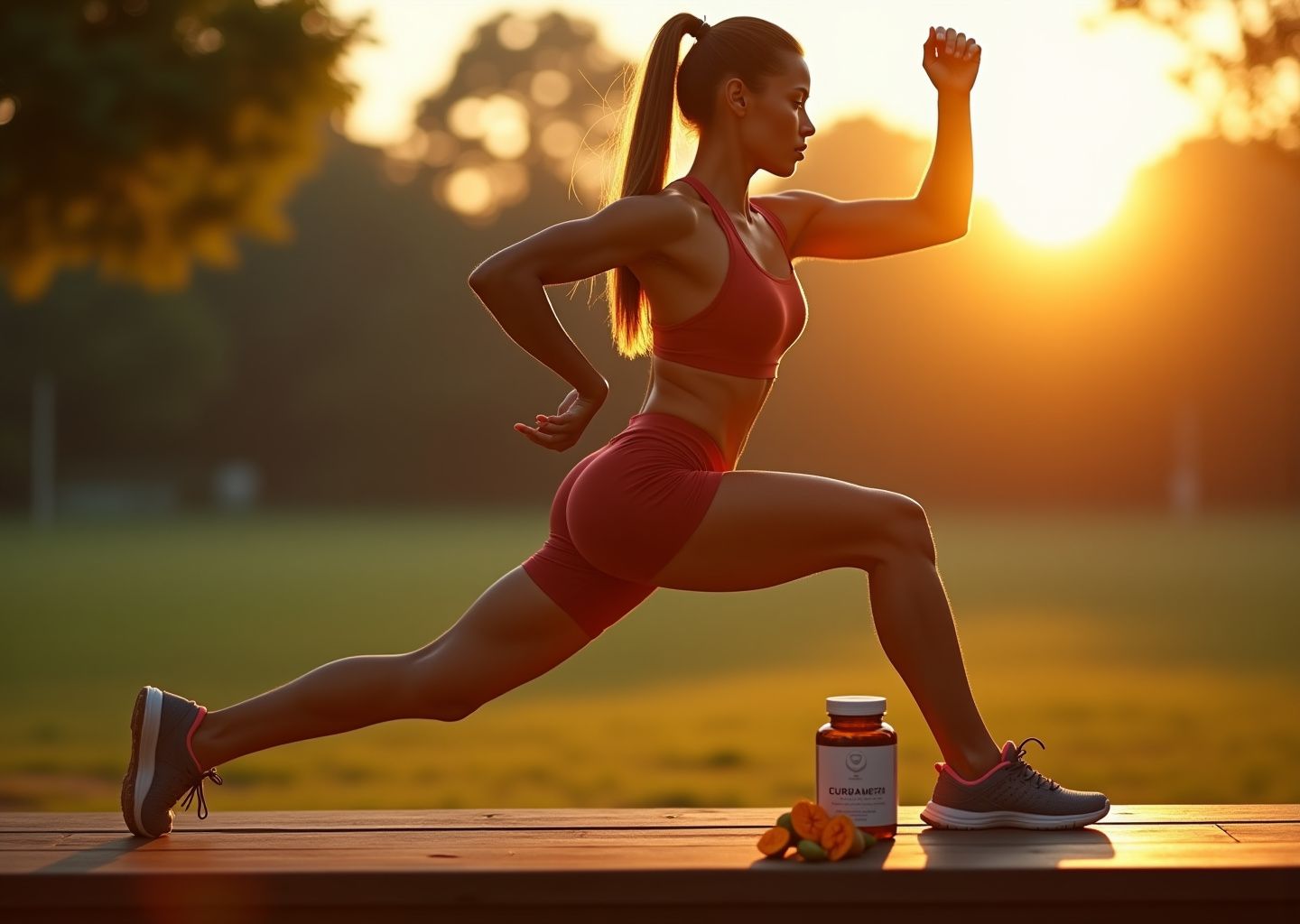
Turmeric and its active compound curcumin have surged as natural anti-inflammatories for joint pain. For everyday athletes focused on mobility and structured stretching, understanding whether these supplements reduce joint inflammation, speed recovery, and fit into training plans is essential. This article reviews mechanisms, clinical evidence, dosing, safety, supplement selection, and how to pair curcumin with mobility programs.
Why joint inflammation matters for everyday athletes
For any athlete, from the weekend runner to the dedicated lifter, inflammation is a constant companion. It’s a term we hear all the time, often painted as the villain behind every ache, pain, and injury. But the truth is more nuanced. Inflammation is a fundamental biological process that is both a powerful ally in our quest for strength and a formidable foe that can derail our progress. Understanding this duality is the first step toward managing your joint health, improving mobility, and ensuring you can keep training effectively for years to come. The key lies in recognizing the difference between the inflammation that helps you adapt and the kind that slowly grinds you down.
Inflammation comes in two distinct forms, acute and chronic. Acute inflammation is the body’s immediate, short-term response to injury or intense effort, like a tough squat session. It’s a crucial part of the healing and adaptation process. When you stress your muscles and connective tissues, the body dispatches an army of immune cells, primarily neutrophils, to the site. They clean up damaged cells and release signals that kickstart repair and rebuilding. This process, lasting a few hours to a few days, is what makes you stronger. Without it, you wouldn’t build muscle or improve performance. Chronic inflammation, on the other hand, is a low-grade, persistent state of alert that can last for weeks, months, or even years. Here, the immune response never fully shuts off. Cells like macrophages and lymphocytes linger in the tissue, continually releasing inflammatory signals that cause ongoing damage instead of repair. This is the harmful inflammation that degrades joint health and sabotages athletic goals.
Inside a synovial joint, like your knee or shoulder, this chronic inflammatory process creates a destructive environment. The joint capsule is lined with a thin membrane of specialized cells called synoviocytes. When chronically inflamed, these cells proliferate and release a flood of pro-inflammatory messengers called cytokines, including tumor necrosis factor-alpha (TNF-α), interleukin-1β (IL-1β), and interleukin-6 (IL-6). These cytokines act like alarm bells that won’t stop ringing. They signal to other cells, including the chondrocytes that live within your cartilage, to start producing enzymes that break down the very cartilage they are supposed to maintain. This cascade leads to a slow but steady degradation of the smooth, protective surface of your joints, a hallmark of conditions like osteoarthritis. This isn’t just a disease of aging; for athletes, it’s often a consequence of accumulated wear, tear, and unresolved inflammation. The same process contributes to other common athletic ailments like tendinopathy, where a failed healing response leaves tendons weak and painful, and bursitis, the painful inflammation of the fluid-filled sacs that cushion our joints.
This persistent, low-level inflammation directly impacts your ability to move well. It alters your range of motion through pain and swelling, physically limiting how far a joint can travel. Your body, in an effort to protect itself, will also tighten surrounding muscles, further restricting mobility. Over time, the quality of the joint tissues themselves degrades. Cartilage becomes thinner and less resilient, while tendons and ligaments lose their organized structure, becoming more susceptible to tears. Perhaps most insidiously, your body learns to move around the pain. You develop compensatory movement patterns, like shifting your weight during a squat or altering your running gait, to offload the sore joint. While this provides temporary relief, it places abnormal stress on other parts of your body, increasing your overall injury risk and creating a cycle of dysfunction that is hard to break. This translates directly to reduced performance. You can’t generate as much force, your endurance suffers, and your risk of a more serious, sidelining injury skyrockets.
Several factors can push an athlete toward this state of chronic joint inflammation. Overtraining, or simply increasing training load too quickly without adequate recovery, is a primary driver. Poor movement mechanics from a lack of mobility or strength imbalances repeatedly stress joints in suboptimal ways. Other contributors include age, as our tissues naturally become less resilient, and excess body weight, which adds both mechanical load to joints and contributes to a state of systemic, metabolic inflammation. A previous injury can also create a weak link that is more susceptible to future inflammatory issues. For the mobility-focused athlete, the goal is not to eliminate inflammation entirely. The acute inflammatory response to training is vital. The objective is to control the harmful, chronic inflammation that limits your movement, causes persistent pain, and prevents you from performing at your best. By managing this destructive inflammation, you preserve the beneficial aspects of training while protecting your long-term joint health, allowing you to move better and stay pain-free.
How turmeric and curcumin work in the body
To understand how that golden spice in your cabinet might help your joints, we need to separate two key terms: turmeric and curcumin. Think of turmeric (Curcuma longa) as the whole plant root, the one you grind into a spice. Curcumin is the star player within that root. It’s the principal bioactive compound, part of a group called curcuminoids, that researchers believe is responsible for most of the health benefits. While culinary turmeric contains some curcumin, it’s usually only about 2-5% by weight, which is why supplements use concentrated extracts standardized to contain a much higher percentage, often 95%, of curcuminoids.
At a molecular level, curcumin acts like a sophisticated modulator of your body’s inflammatory response. One of its primary targets is a protein complex called nuclear factor-kappa B, or NF-κB. You can think of NF-κB as a master switch that, when flipped on by stress or injury, triggers the production of a cascade of inflammatory molecules. Preclinical and clinical research shows curcumin can help keep this switch in a more neutral position. By modulating NF-κB, it helps turn down the volume on several key pro-inflammatory cytokines, including interleukin-1β (IL-1β), interleukin-6 (IL-6), and tumor necrosis factor-alpha (TNF-α). These are the same messengers that drive pain and cartilage breakdown in conditions like osteoarthritis. Furthermore, curcumin inhibits the activity of COX and LOX enzymes, which are involved in producing inflammatory prostaglandins and leukotrienes. This action is somewhat similar to how NSAIDs work, but curcumin influences a broader array of pathways. It also functions as a potent antioxidant, neutralizing damaging free radicals, and may have direct chondroprotective effects by inhibiting enzymes that degrade cartilage.
Despite these powerful mechanisms, there’s a major hurdle: curcumin on its own has very poor oral bioavailability. This means when you ingest it, very little actually gets absorbed into your bloodstream to reach your joints. Your body rapidly metabolizes and eliminates it. This is where modern supplement technology comes in. Scientists have developed several strategies to overcome this challenge. The most well-known method is combining curcumin with piperine, the active compound in black pepper. Piperine works by inhibiting the enzymes in your liver and intestinal wall that break down curcumin, which early studies found could increase bioavailability by up to 20 times. More advanced delivery systems have since been developed. Phytosome formulations, like the branded ingredient Meriva, bind curcumin to a phospholipid (a type of fat), which helps shuttle it across the gut lining more effectively. Other technologies include liposomal, nanoemulsion, and micellar forms, which encase curcumin in tiny, water-soluble spheres. These advanced formulations can boost absorption even more dramatically, with some proprietary products reporting bioavailability improvements of 30 to over 180 times that of standard curcumin powder.
This improved absorption is what makes the clinical evidence so compelling. A growing body of research, including numerous randomized controlled trials and meta-analyses, supports the use of curcumin for joint pain. For osteoarthritis, particularly of the knee, multiple high-level reviews have concluded that curcumin extracts are effective at reducing pain and improving function, often measured by WOMAC scores. The effect sizes are generally moderate, and some studies have even found curcumin’s pain-relieving effects to be comparable to NSAIDs like ibuprofen, but with fewer gastrointestinal side effects. For athletes, studies looking at exercise-induced muscle soreness (DOMS) have found that curcumin can reduce subjective muscle pain and lower inflammatory markers like TNF-α and creatine kinase. The benefits in osteoarthritis trials are typically seen within 4 to 12 weeks. While the evidence for osteoarthritis is quite robust, it’s important to note that many studies are small and use different formulations, leading to variability in results. The evidence for exercise-related pain is promising but still developing.
Topical curcumin has also been explored, though the evidence is more limited. Small trials suggest that curcumin-based gels or creams applied directly to a painful joint may help reduce localized pain, offering an alternative for those who prefer not to take oral supplements or want to combine approaches.
Finally, it’s essential to consider safety. In clinical trials, curcumin is generally well-tolerated. The most common side effects are mild gastrointestinal issues like nausea or diarrhea, especially at higher doses (above 1,500 mg/day). Although rare, there have been post-market reports of liver toxicity, so caution is advised for individuals with pre-existing liver conditions. Curcumin can also interact with certain medications. Because it can have antiplatelet effects, it may increase bleeding risk when taken with anticoagulants or antiplatelet drugs like warfarin. It can also interfere with the metabolism of some drugs processed by CYP enzymes or P-glycoprotein, including certain chemotherapies. For these reasons, anyone taking prescription medications, as well as those who are pregnant, breastfeeding, or have chronic liver disease, should consult their doctor before starting a curcumin supplement.
Practical guidance for athletes and coaches
Translating the science of curcumin into a daily routine requires a practical, step-by-step approach. For athletes managing joint stress from running, lifting, or daily activity, the goal is to use curcumin effectively as one tool in a larger performance and recovery toolkit. This guidance will help you choose the right product, dose it correctly, and integrate it into a comprehensive plan for better mobility.
Choosing a High-Quality Curcumin Supplement
Navigating the supplement aisle can be confusing. Not all curcumin products are created equal, and the label tells you everything you need to know if you can decode it. Here’s what to focus on.
Look for ‘Curcuminoids,’ Not Just ‘Turmeric’
Your goal is to get a therapeutic dose of the active compounds, the curcuminoids. A supplement listing only “turmeric root powder” might provide as little as 2-5% curcuminoids by weight, which is far too low to match the doses used in clinical studies. Look for a product that features a “standardized extract.” The most common and well-researched is an extract standardized to 95% curcuminoids. This ensures a concentrated and consistent dose. For example, a 500 mg capsule of an extract standardized to 95% delivers 475 mg of active curcuminoids.
Understand the Formulation for Absorption
As you know, curcumin is poorly absorbed on its own. Manufacturers use different technologies to solve this problem. You’ll typically see three main types on the market.
- Piperine (Black Pepper Extract) This is the most common and cost-effective method. Piperine, often listed as BioPerine®, inhibits the metabolic breakdown of curcumin in the liver and gut wall. A small amount, typically 5-10 mg per dose, can significantly boost absorption. This is a solid, evidence-based starting point.
- Phytosome Formulations In this technology, curcumin is bound to a phospholipid, usually from soy lecithin (e.g., Meriva®) or sunflower. This lipid-loving complex helps shuttle curcumin across the gut lining more efficiently. Clinical trials using phytosome technology have shown good results for joint pain, often with a lower required dose of curcuminoids compared to standard extracts.
- Liposomal and Micellar Formulations These are advanced delivery systems that encase curcumin in tiny, water-soluble spheres (liposomes or micelles). They are designed for maximum bioavailability and may produce much higher blood levels of curcumin. While often more expensive, they can be an excellent option for individuals who don’t respond to other forms or want to maximize absorption with the lowest possible dose.
Prioritize Third-Party Testing
For athletes, especially those in tested sports, this is non-negotiable. Third-party certifications from organizations like NSF Certified for Sport, Informed-Sport, or USP Verified provide assurance that the product contains what the label says it does, is free from harmful contaminants, and has been screened for banned substances. Curcumin itself is not on the WADA Prohibited List, but supplement contamination is a real risk.
Dosing, Timing, and Practical Use
Starting and Maintenance Dosing
Based on clinical trials for osteoarthritis and exercise-induced inflammation, a typical effective dose ranges from 500 to 1,500 mg of total curcuminoids per day. A sensible starting strategy is to begin with 500 mg of a standardized 95% extract (with an absorption enhancer) taken once or twice daily. Maintain this dose for at least 6-8 weeks to assess its effect on your symptoms. If you tolerate it well but feel you need more relief, you can gradually increase the dose, staying within the clinically studied range. Always follow the product’s specific instructions, as highly bioavailable formulations may recommend lower doses.
Timing with Meals is Key
Curcumin is lipophilic, meaning it dissolves in fat. Taking your supplement with a meal that contains healthy fats like avocado, nuts, olive oil, or fatty fish can significantly improve its absorption. Avoid taking it on an empty stomach, which can sometimes lead to mild digestive upset.
When to Consider Topical Curcumin
Topical curcumin gels and creams can be a useful addition for localized pain in superficial joints like the fingers, knees, or elbows, or for tendons like the Achilles. It allows you to deliver the anti-inflammatory compounds directly to the source. It is not a replacement for an oral supplement for systemic inflammation but can be used alongside it for targeted relief. Apply a thin layer to the affected area two to three times per day.
Integrating Curcumin into a Complete Mobility Program
A supplement is just that: a supplement to a solid foundation. Curcumin works best when it’s part of a holistic strategy to protect your joints and improve movement quality.
- Load Management and Strength Training Curcumin can help manage inflammation, but it doesn’t correct the biomechanical issues that cause it. A well-designed strength training program that builds resilient tendons and supportive muscle around your joints is your primary defense.
- Mobility and Flexibility Use the pain relief from curcumin as a window of opportunity to improve your range of motion through consistent stretching and mobility work.
- Nutrition, Sleep, and Weight Control An anti-inflammatory diet rich in whole foods, adequate sleep for recovery, and maintaining a healthy weight are all powerful strategies that reduce the overall inflammatory burden on your body.
Advanced Considerations for Athletes
Impact on Training Adaptations
A valid concern for any athlete is whether an anti-inflammatory supplement might blunt the beneficial adaptations to exercise. The current body of evidence suggests that curcumin does not hinder muscle hypertrophy or strength gains. The theory is that curcumin helps manage excessive, chronic inflammation without completely shutting down the acute inflammatory response that is a necessary signal for muscle repair and growth. For most athletes, using curcumin to manage symptoms during heavy training blocks or for chronic joint issues appears to be safe for performance goals.
Combining with Other Supplements
Combining supplements with complementary mechanisms is a popular strategy.
- Omega-3 Fatty Acids: This is a logical pairing. Both curcumin and omega-3s (from fish oil, for example) have well-documented anti-inflammatory properties that work through different pathways, potentially offering a synergistic effect.
- Glucosamine & Chondroitin: These compounds are thought to provide structural support for cartilage. While the evidence for them is mixed, many individuals with osteoarthritis report subjective benefits from combining them with curcumin.
- Boswellia Serrata: This herbal extract is another potent anti-inflammatory that is often included with curcumin in joint health formulas.
The primary caveat is to introduce one new supplement at a time to properly assess its effects and your tolerance before creating a complex stack.
NSAID-Sparing Strategies and When to See a Doctor
Many athletes use curcumin to reduce their reliance on non-steroidal anti-inflammatory drugs (NSAIDs) like ibuprofen or naproxen. For chronic, low-grade aches and pains, curcumin can be a sustainable long-term option with a more favorable safety profile, particularly regarding gastrointestinal health. However, it is not a direct replacement for an NSAID in all situations. For acute, severe pain from an injury, a short course of an NSAID under medical guidance may still be appropriate for rapid pain and inflammation control. Curcumin is not a rescue remedy.
You should always seek medical evaluation for warning signs such as:
- Severe pain, swelling, or bruising after an injury.
- Inability to bear weight on a limb.
- A joint that looks deformed or feels unstable.
- Pain that is constant, severe, and not related to movement.
Monitoring and a Pre-Supplement Checklist
Before adding curcumin to your routine, run through this quick checklist to ensure you’re proceeding safely.
- Consult Your Clinician Discuss curcumin with your doctor or a sports-focused registered dietitian, especially if you have a medical condition or take prescription medications.
- Review Your Medications Curcumin can interact with certain drugs, most notably anticoagulants and antiplatelet agents (blood thinners). A thorough medication review is essential.
- Consider Baseline Liver Tests While rare, there have been reports of liver injury with curcumin supplements. If you plan to use high doses for a prolonged period or have a pre-existing liver condition, discuss getting baseline liver function tests (LFTs) with your doctor.
- Track Your Progress Before you start, rate your baseline pain and function. Re-evaluate after 6-8 weeks. Are you moving better? Is your pain less frequent or intense? This objective check-in will help you decide if the supplement is truly working for you.
Takeaways and practical conclusions
After exploring the science, the formulations, and the common questions, let’s distill everything into a clear, results-oriented action plan. This is where the research meets the real world of your training, your goals, and your daily life. The ultimate aim is to help you decide if curcumin is a worthwhile tool for your joint health toolkit and how to use it effectively.
The evidence supporting curcumin as an anti-inflammatory aid is promising, but it’s important to be realistic. Think of it as a valuable supporting player, not the star of the show. The research is strongest for managing the symptoms of knee osteoarthritis. Multiple studies and reviews, including a 2021 umbrella review of meta-analyses, show that curcumin can significantly reduce pain and improve function in people with knee OA, with some studies finding its effects comparable to NSAIDs like ibuprofen but with fewer gastrointestinal side effects. There is also low-to-moderate evidence that it can help reduce delayed onset muscle soreness (DOMS) and markers of muscle damage like creatine kinase (CK) after strenuous exercise. This makes it relevant for lifters and runners recovering from tough sessions. For autoimmune conditions like rheumatoid arthritis, the evidence is emerging but less consistent; it may help manage symptoms, but more research is needed. A key research gap remains in understanding if curcumin can slow or reverse actual structural damage to cartilage. Current evidence primarily supports its role in managing symptoms like pain and inflammation.
So, how do you translate this into practice? Here are the essential, actionable steps for integrating curcumin into your routine.
-
Prioritize Formulation Over Raw Powder.
Your body struggles to absorb standard curcumin powder. To get meaningful anti-inflammatory effects, you need a product designed for enhanced bioavailability. Look for formulations that are complexed with piperine (black pepper extract), formulated as a phytosome (bound to a lipid like lecithin, such as Meriva®), or use micellar or nano-emulsion technology. These methods can increase absorption dramatically, ensuring the active compounds reach your system. A label simply stating “turmeric powder” is not sufficient for a therapeutic effect; you need a standardized extract listing the total milligrams of curcuminoids, typically standardized to 95%. -
Follow a Simple Dosing Rule.
A good starting point for most athletes is 500 to 1,500 milligrams of total curcuminoids per day. It’s often best to split this into two doses, for example, 500 mg in the morning and 500 mg in the evening. Always take it with a meal that contains some fat, as this further aids absorption. If you’re using a highly bioavailable formulation like a phytosome or micellar product, you may be able to achieve similar effects with a lower milligram dose, so follow the manufacturer’s instructions and check for studies on that specific product. -
Be Patient and Set a Realistic Timeframe.
Curcumin is not an immediate pain reliever like an NSAID. Its effects are cumulative as it works to modulate inflammatory pathways. You should commit to a trial period of at least 6 to 12 weeks to fairly assess if it’s working for you. For exercise-related soreness, you might notice benefits within a few days, but for chronic joint aches, consistent daily use over several weeks is necessary to gauge its true impact. -
Remember That Supplementation Is Secondary.
No supplement can outperform a smart approach to training and recovery. Curcumin is an adjunct, not a replacement, for the fundamentals. Your first line of defense against joint pain should always be a well-structured program. This includes load management to avoid overstressing your joints, strength training to build resilient tissues that support your joints, and dedicated mobility work to maintain healthy range of motion. If your joints hurt because you’re lifting with poor form or suddenly doubling your running mileage, curcumin won’t fix the root cause. -
Monitor for Safety and Side Effects.
Curcumin is generally well-tolerated, with the most common side effects being mild gastrointestinal issues like bloating or nausea, especially at higher doses. Starting with a lower dose can help mitigate this. It’s crucial to be aware of potential interactions. If you take blood-thinning medications, have a history of liver disease, or are preparing for surgery, you must discuss using curcumin with your doctor first. While rare, there have been reports of liver enzyme elevations with high-dose use, so periodic monitoring may be wise for long-term users.
Finally, approach this process with a mindset of personal experimentation and diligence. Before you start, have a conversation with your doctor or a registered dietitian, especially if you have underlying health conditions or take other medications. Once you begin, track your outcomes. Keep a simple log of your pain levels, your ability to perform certain movements, and your use of other pain relievers. After your 8 to 12-week trial, you’ll have objective data to help you and your healthcare provider make an informed decision about whether curcumin deserves a long-term spot in your health and performance strategy.
References
- Curcumin for the management of knee osteoarthritis: An umbrella review… — Zeng et al. (2021) found that curcumin is a promising treatment for knee osteoarthritis, improving pain and function.
- Can turmeric reduce inflammation? – UCLA Health — A 2016 study reviewed six studies that used turmeric or curcumin specifically for arthritis pain, comparing them to either a placebo, glucosamine or the NSAIDs …
- Curcumin: A Review of Its Effects on Human Health — Hewlings & Kalman (2017) review the anti-inflammatory, antioxidant, and bioavailability aspects of curcumin.
Legal Disclaimers & Brand Notices
The content provided in this article is for informational purposes only and is not intended as a substitute for professional medical advice, diagnosis, or treatment. Always seek the advice of your physician or other qualified health provider with any questions you may have regarding a medical condition or before starting a new supplement regimen, especially if you are pregnant, breastfeeding, or taking prescription medications.
All product names, logos, and brands mentioned in this article, including BioPerine® and Meriva®, are trademarks or registered trademarks of their respective owners. Their use does not imply any affiliation with or endorsement by them.